De Gier Bebop Classic 5 VP Blue Relic
You might also want to connect with us on Facebook, YouTube, Instagram, or by email.
Out of stock
Sander de Gier has been building instruments in his workshop in Heinenoord, just south of Rotterdam, since 1996, and the Bebop Classic is the most single-minded thing that comes out of it. His own brief for the model is refreshingly blunt: the best vintage Jazz bass available, other than a real vintage Jazz bass. That means no preamp, no active circuit, no modern conveniences bolted onto the side — a steel bridge, a thin nitro finish, a veneered rosewood board and vintage-voiced pickups, chosen because each one audibly does something to the sound.
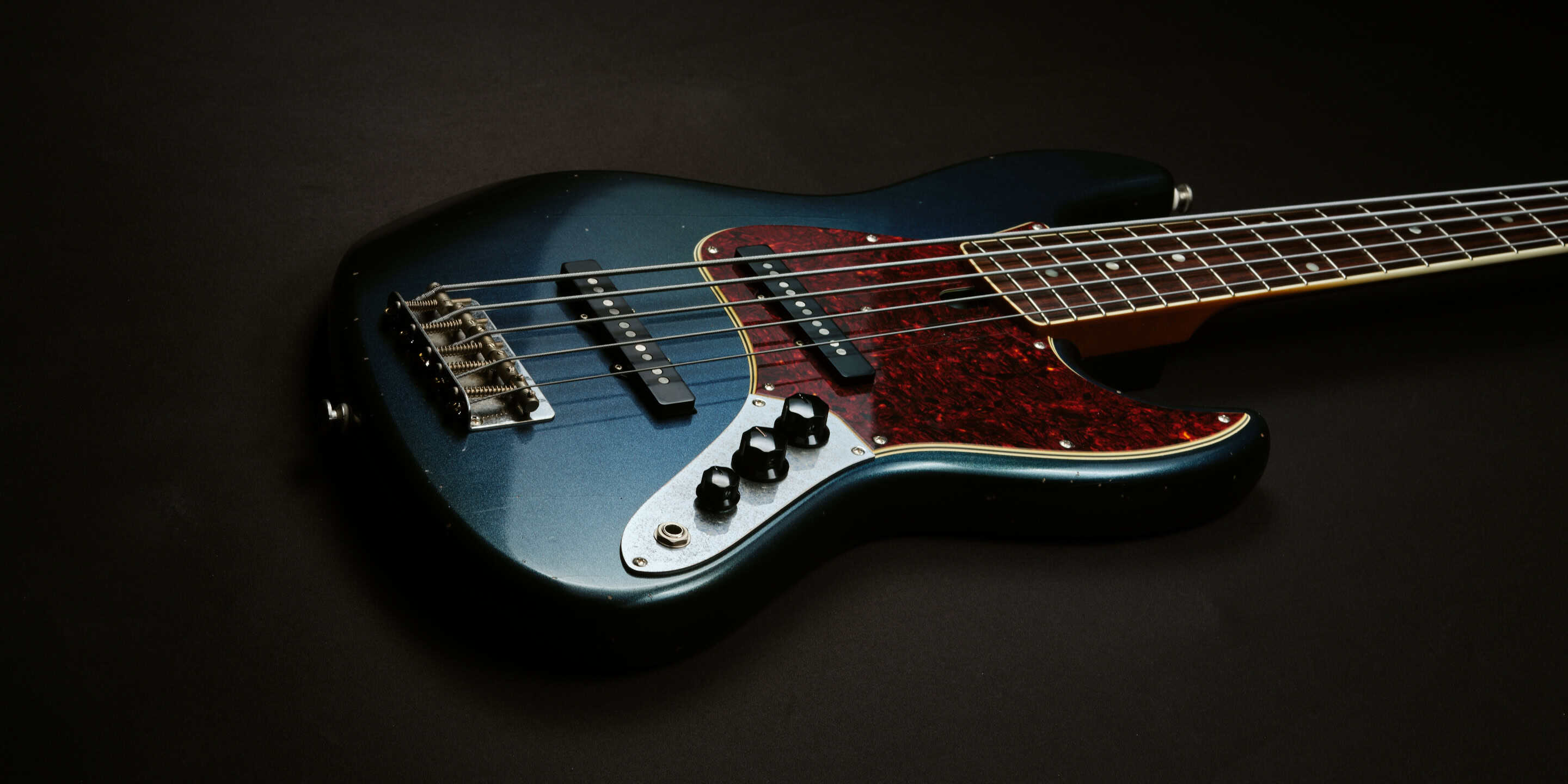
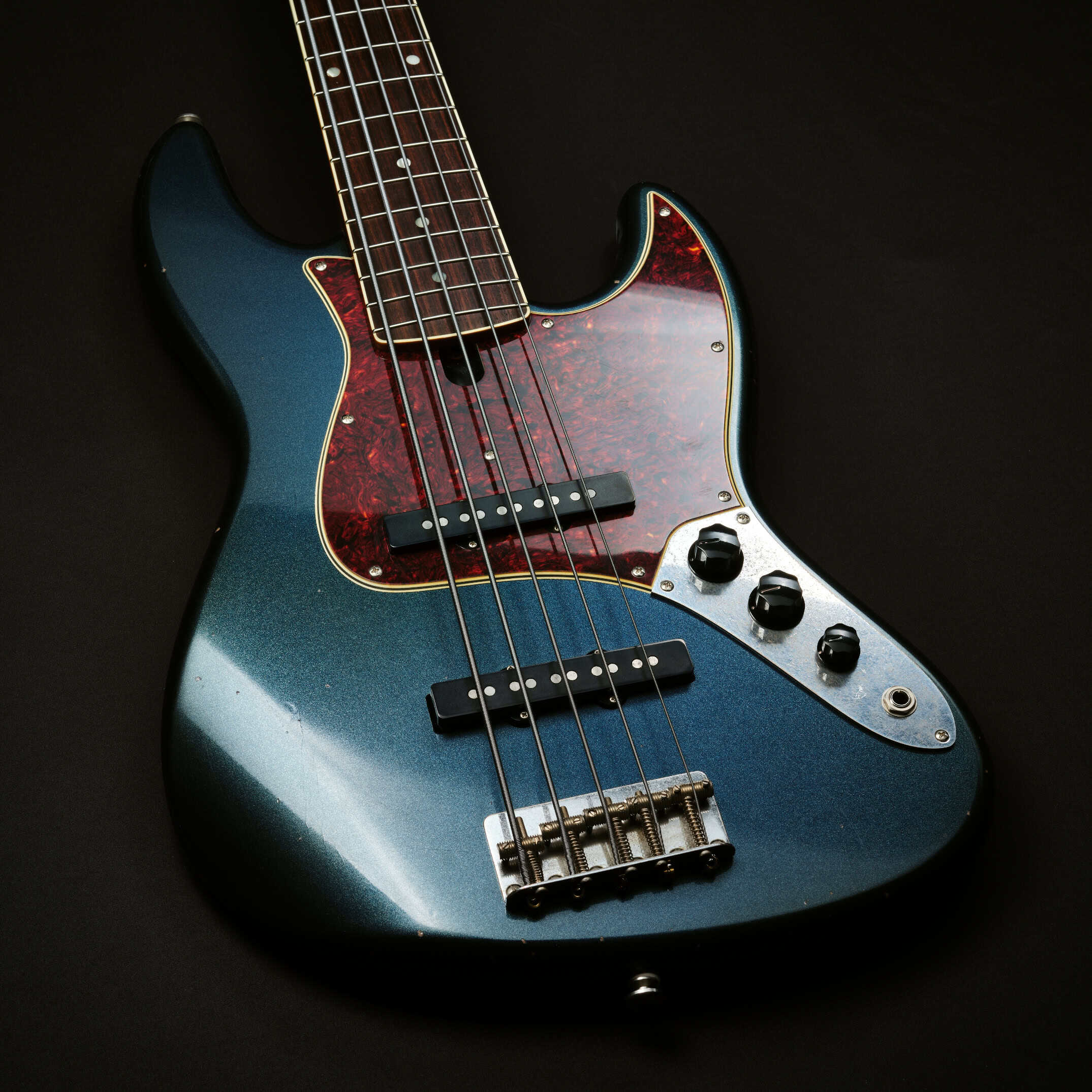
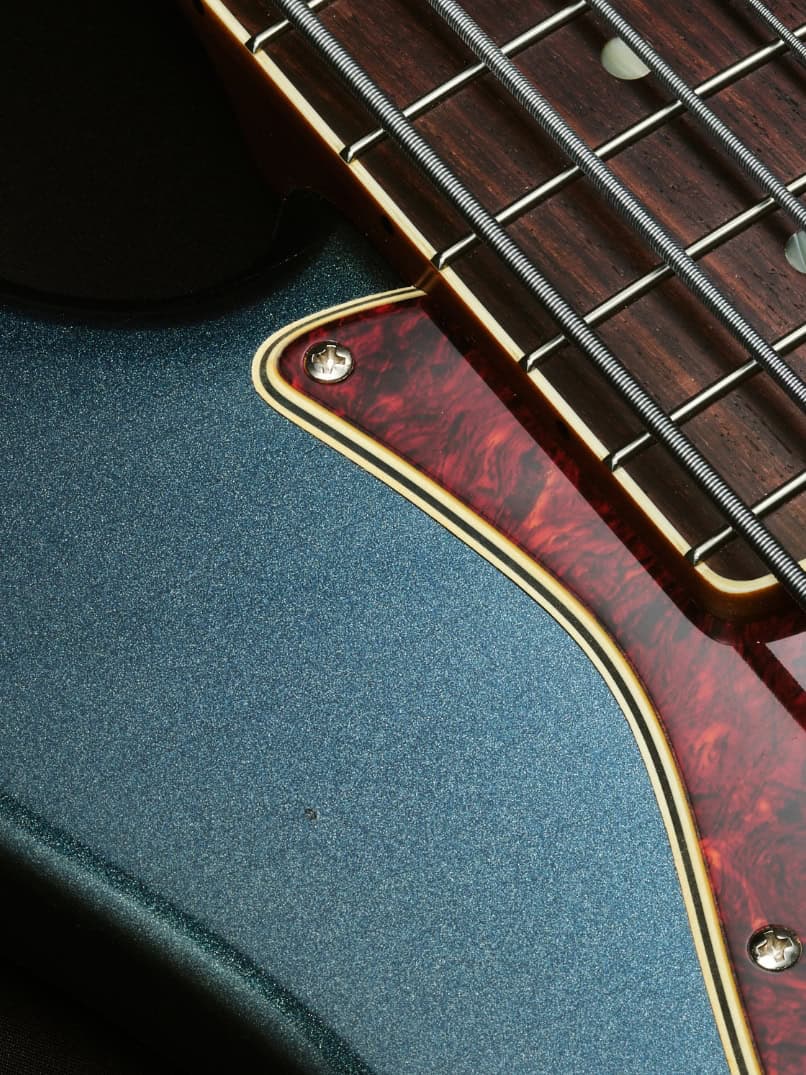
This one is a five-string in VP Blue — Vice Presidential Blue, a deep metallic that reads petrol under the lights and rolls almost black into the burst at the edges — worn back by hand until it looks like it has been earning a living for decades. A cream-bound rosewood board with dot inlays and a tortoiseshell guard give it a slightly dressier face than the plain-Jane version, and a pair of hand-wound Kloppmann pickups does all the talking.
There's no preamp to hide behind on this one — two hand-wound Kloppmanns, a tone knob, and a bass that has to be good enough to get away with it.
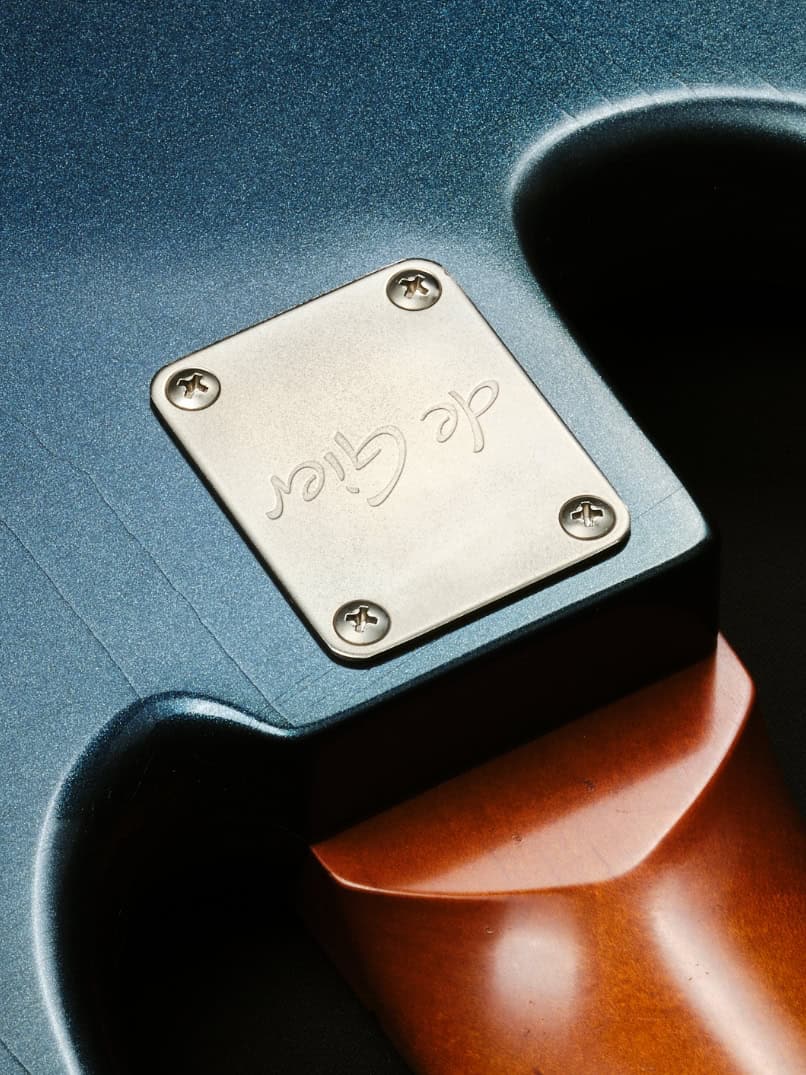
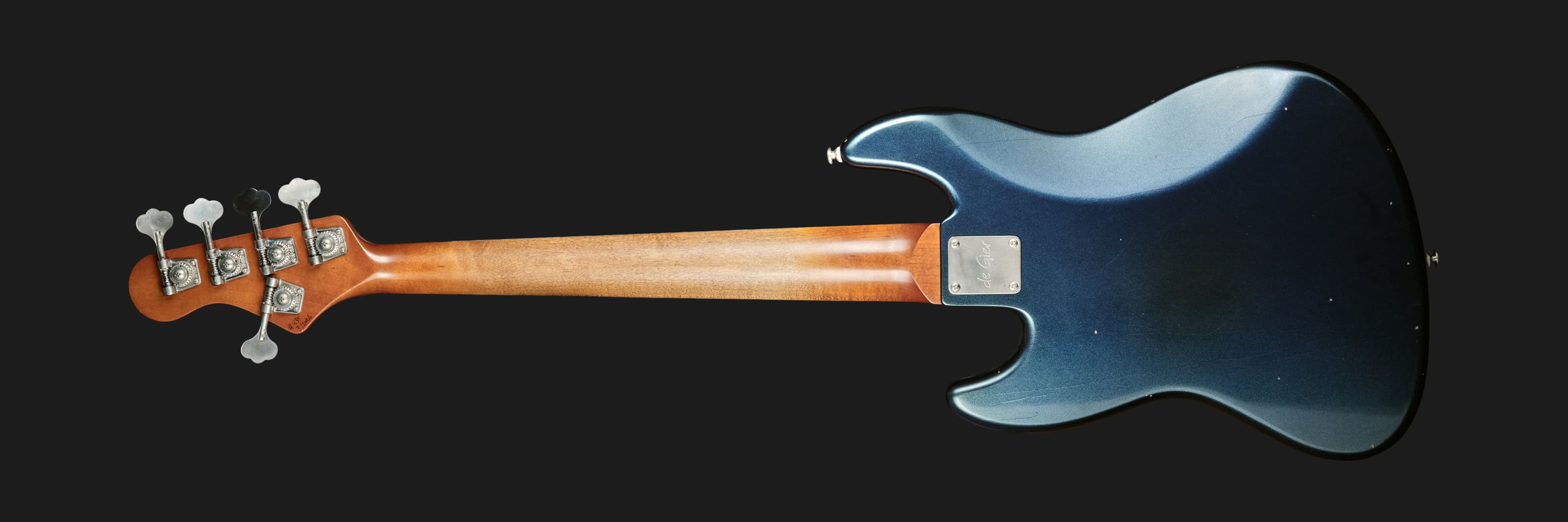
The body is alder, the most even-handed wood in the Jazz Bass canon. It gives you a punchy but controlled low end, a midrange that sits forward enough to cut through a loud band, and highs that stay open without turning glassy. Alder doesn’t impose a character of its own the way ash or mahogany do — it gets out of the way and lets the pickups and the neck decide what the bass sounds like, which is exactly what you want when the electronics are this simple.
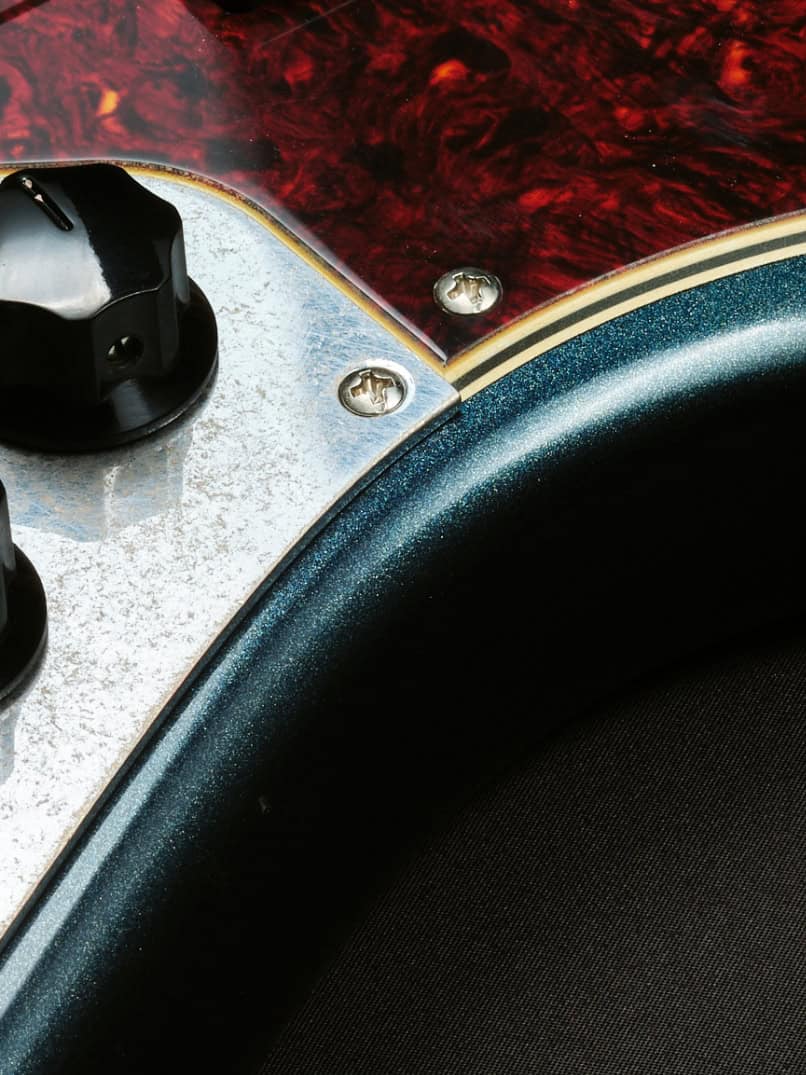
Over that goes a thin coat of nitrocellulose in VP Blue, then the relic work. De Gier’s standard ageing is mild rather than theatrical: light wear through the paint on the forearm and the horns, checking where the finish has moved with the wood, and hardware dulled down to match. The point isn’t the fake backstory — it’s that a thin, aged nitro finish lets the body move and breathe in a way a thick poly shell never does, and the instrument arrives already broken in instead of asking you to do ten years of work on it first.
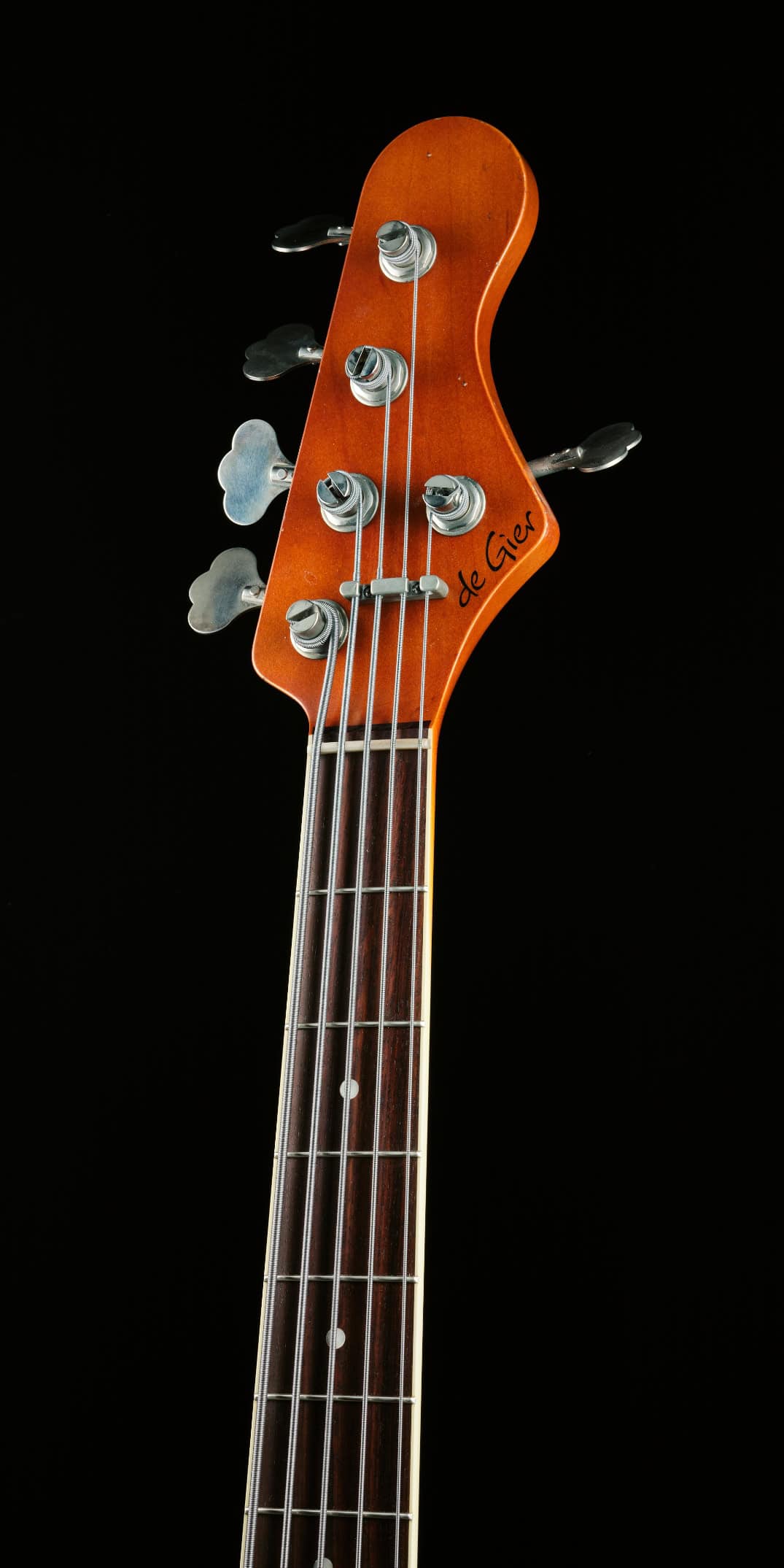
The neck is hard maple, bolted on, carved to a C profile and left with an oil finish on the back so your hand slides instead of sticking — a small thing that you notice about twenty minutes into a hot gig. The fingerboard is rosewood, bound in cream with dot inlays, and it runs a 7.5″ to 12″ compound radius: rounded and vintage-feeling down at the nut where you’re playing open-position lines, flattening out as you climb so the high register stays clean instead of choking out.
There are 20 frets in small, vintage-size wire. Low, narrow fret wire puts more of your fingertip in contact with the board and less of it riding on metal, which gives you a woodier, more immediate note and a little more control over intonation under the finger. It’s the detail that separates a bass built to sound like the ’60s from one that just looks like it. The 34″ scale and 46 mm nut keep the five-string neck in familiar territory, and the strings sit at 19 mm at the bridge — tight enough to move around quickly, wide enough to slap on.
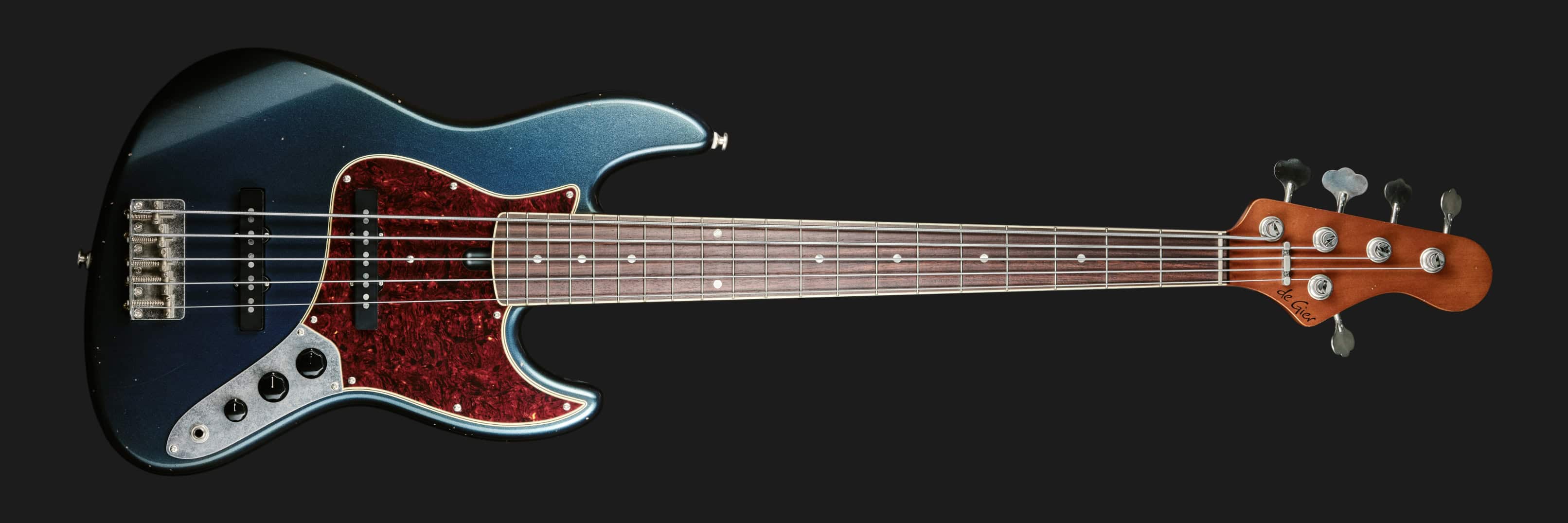
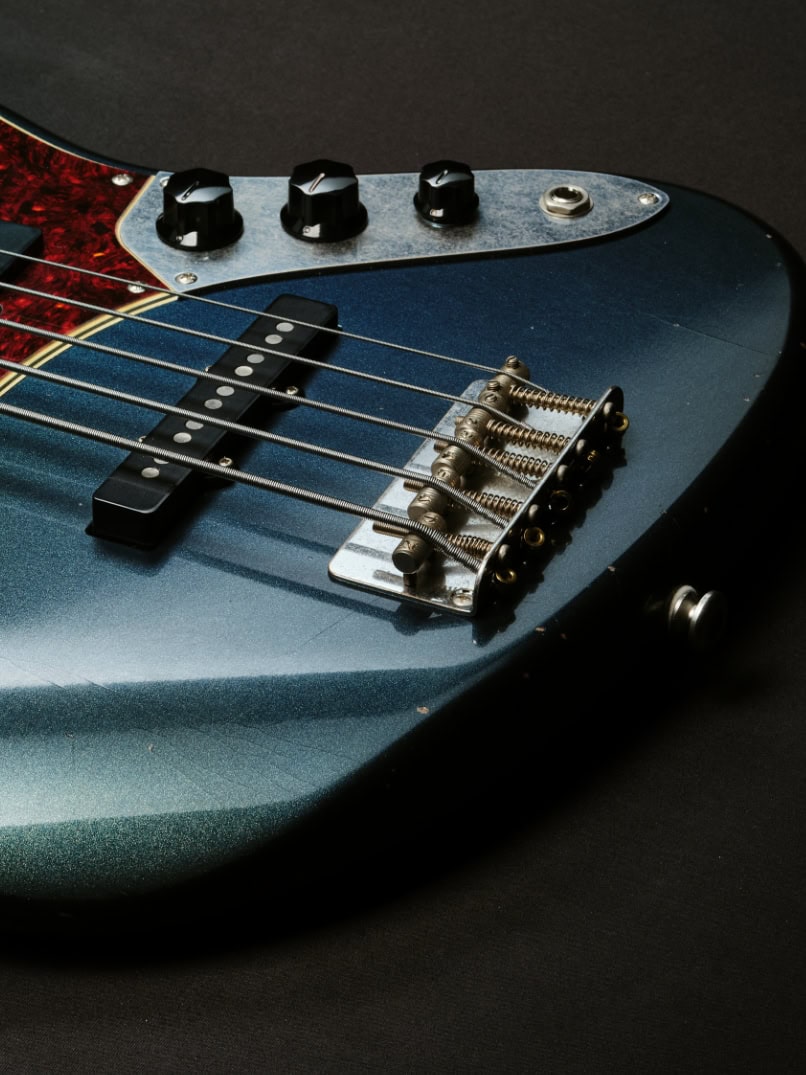
The pickups are the reason this bass costs what it does. Kloppmann Electrics build in Germany, wind by hand, and have spent years building a reputation among vintage players in Europe for getting the old single-coil voice genuinely right rather than approximately right. In a five-string Jazz set that means tight, articulate lows that don’t turn to mush, a vocal midrange that carries a line through a mix without any EQ help, and a top end with real air in it that stops short of harshness. Crucially, they stay even across all five strings — the low B belongs to the same instrument as the G, instead of sounding like an afterthought grafted onto the side.
The circuit is as simple as it gets: Volume, Volume, Tone, passive, straight to the jack. No battery to go flat mid-set, no buffer colouring things on the way out. Both volumes up gives you the fat, scooped both-pickups Motown thump; roll the bridge pickup back a hair and the neck takes over with a round, dark P-adjacent weight; favour the bridge and you get the nasal, mid-forward growl that cuts through a horn section. The tone control does the rest, and because there’s nothing else in the path, the bass responds to your right hand and to your amp’s input stage rather than to a preamp’s idea of what you meant.
The hardware follows the same logic. A steel De Gier bridge with plenty of mass under the saddles feeds sustain and low-end definition back into the body, and Res-o-lite tuners keep the weight off the headstock so a five-string neck doesn’t dive on the strap. All of it is aged to match the body, down to the dulled control plate and the worn screw heads.
This is a bass for the player who has already decided that passive is not a limitation. If you want a five-string that sits in a soul, blues, gospel or straight-ahead session context and sounds like a great old Jazz Bass — with a low B that actually works and a neck that doesn’t fight you — this is the one to try. It ships in the De Gier leather gig bag, and it’s a one-off in this exact spec: VP Blue relic, tortoise guard, bound board, Kloppmann pickups.
Specs
Body
- Body Wood
- Alder
- Color
- VP Blue — Vice Presidential Blue metallic, burst to the edges
- Finish
- Thin nitrocellulose, hand-relic'd — light wear through the paint and aged hardware
Neck
- Neck Wood
- Hard maple, bolt-on, oil finish on the back
- Fingerboard
- Rosewood, bound, with dot inlays
- Scale
- 34"
- Fingerboard Radius
- 7.5" to 12" compound
- Neck Shape
- C
- Nut Width
- 46 mm
- String Spacing
- 19 mm at bridge
- Frets
- 20, small vintage-size
Weight
- Weight
- TBA
Electronics
- Pickups
- Kloppmann Electrics hand-wound Jazz single-coils, 5-string set
- Controls
- Volume, Volume, Tone
- Preamp
- None — fully passive
Hardware
- Pickguard
- Tortoiseshell, bound
- Bridge
- De Gier steel vintage-style, aged
- Tuners
- Res-o-lite
- Hardware Finish
- Aged nickel
- Includes
- De Gier branded leather gig bag