Dingwall Z3-5 Charcoal Burled Maple Top
In stock
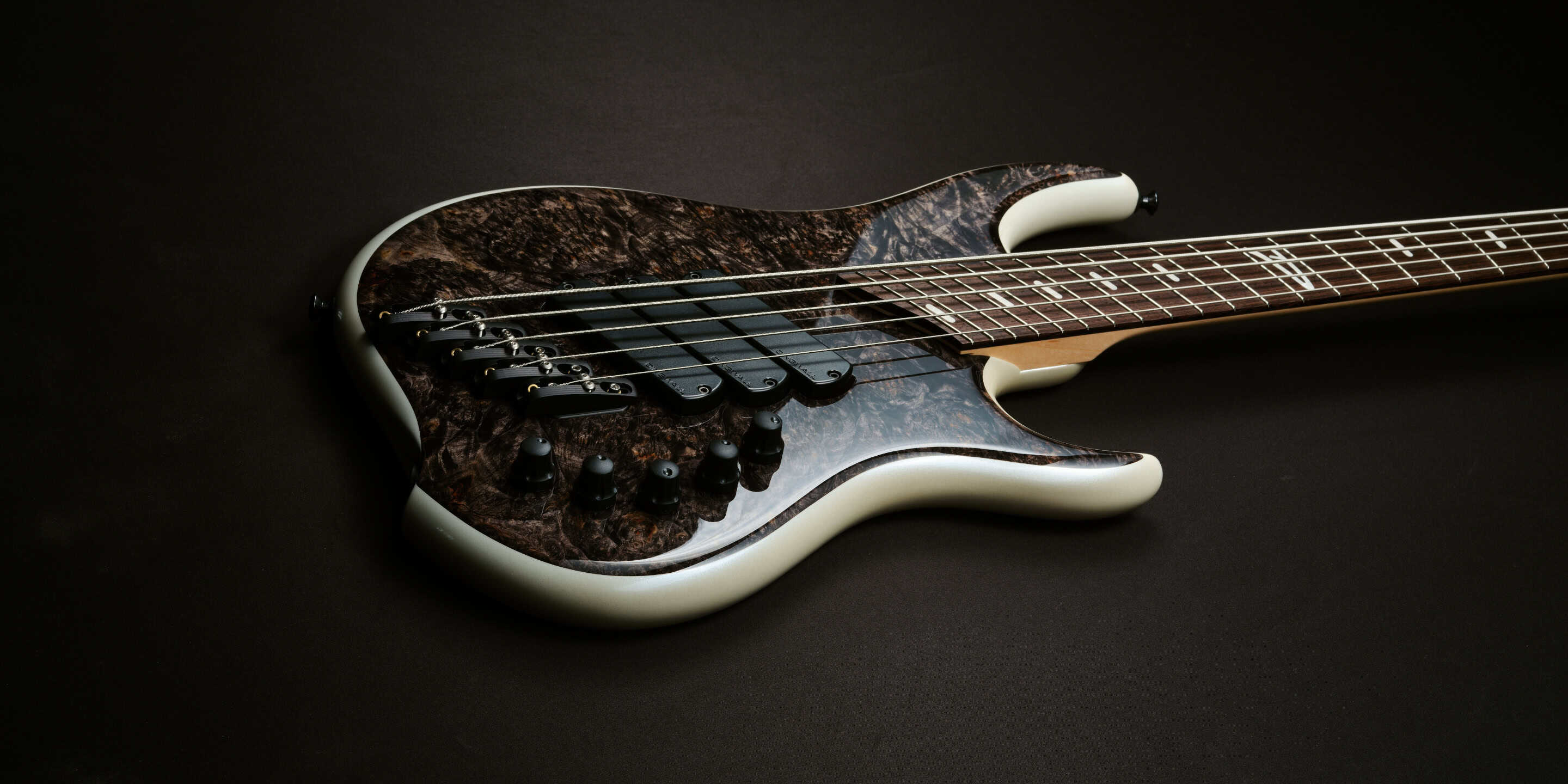
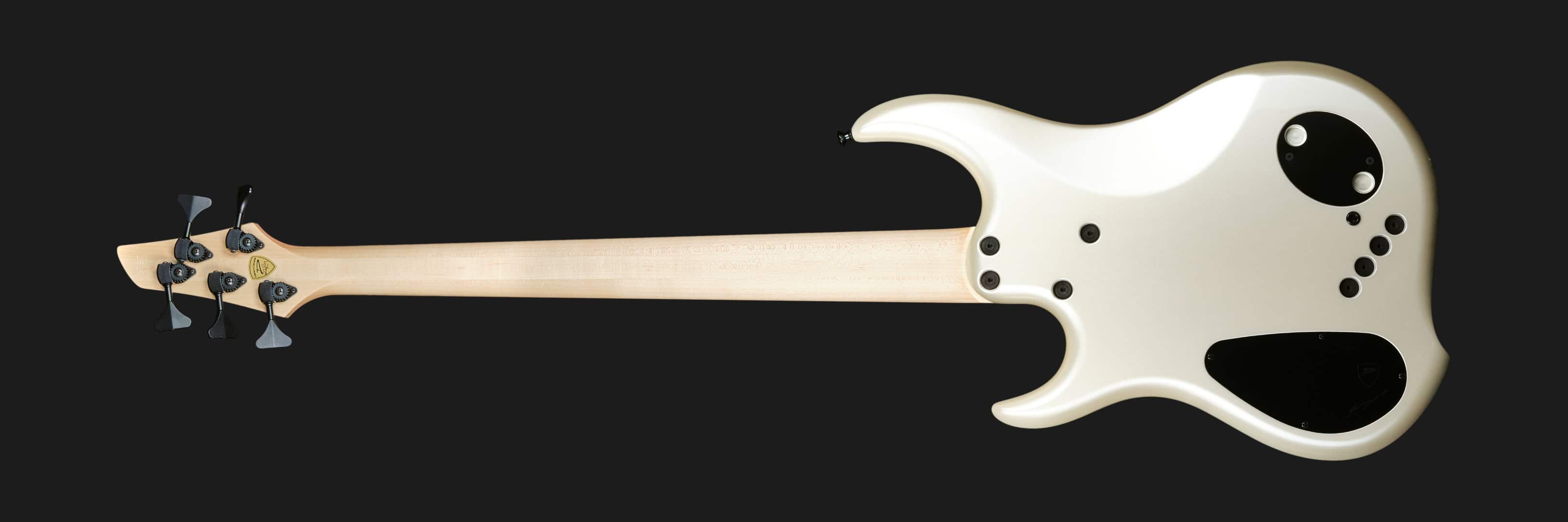
Three pickups, five strings, and a top that stops people mid-sentence. This is the Z3, the most versatile bass in Dingwall’s Canadian-built Z-series, wearing a charcoal burst over maple burl with a pearl Ducati White back and a cream edge that runs the whole way around the body. Turn it over and it is a completely different instrument to look at — which is very much part of the fun.
Dingwall was founded in 1987 by Sheldon Dingwall in Saskatoon, Canada, and the thing that sets these basses apart from everything else on the wall is the fanned frets. If you have played a conventional 5-string, you know the compromise: the low B never quite keeps up with the E. It sounds looser, duller, less defined — not because B-strings are bad, but because a 34″ scale is simply too short to give that string proper tension and harmonic content.
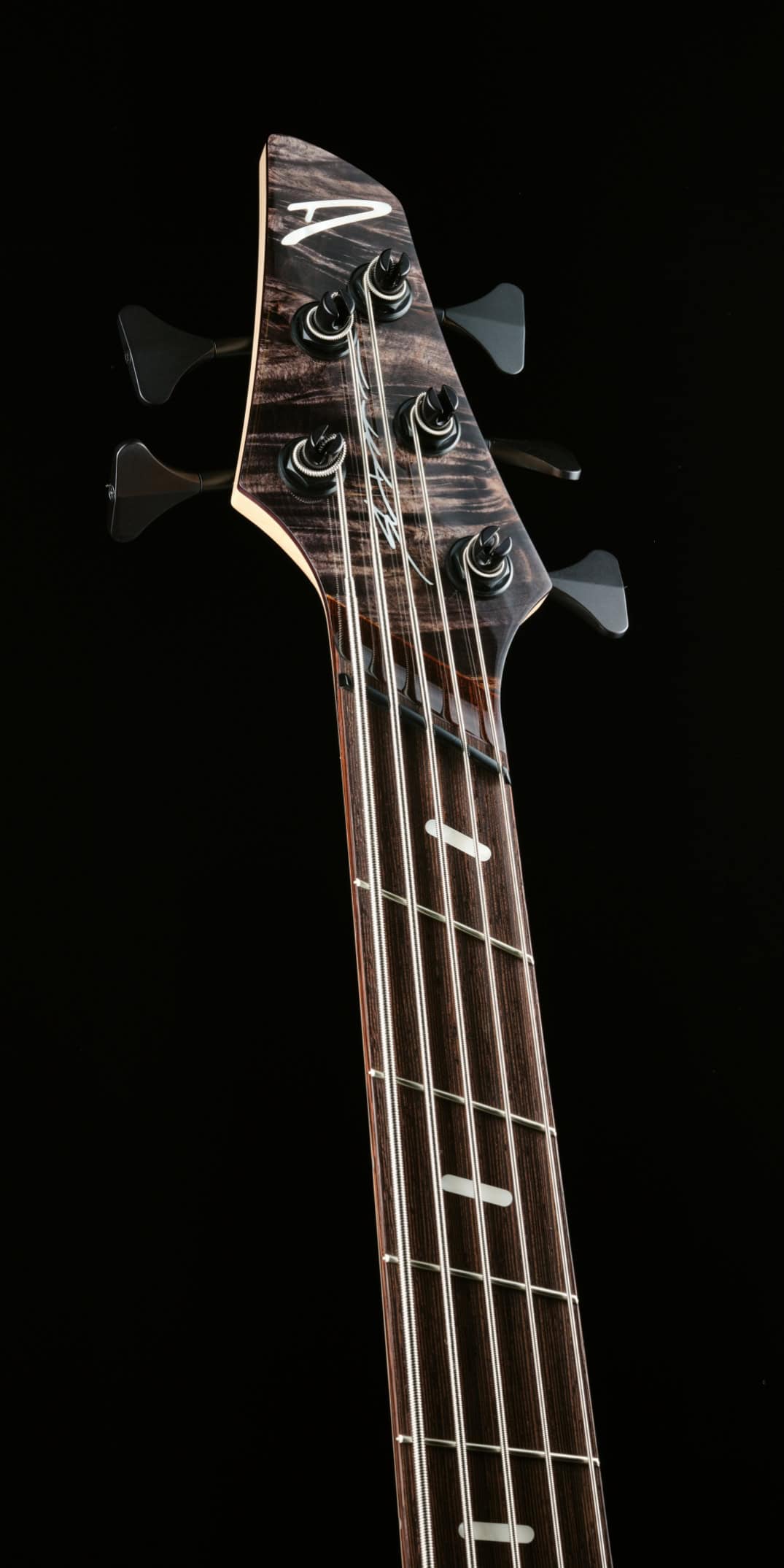
Dingwall’s answer is to give every string the scale length it actually wants. On this bass the B sits at 37″, the E at 36.25″, the A at 35.5″, the D at 34.75″ and the G at 34″. The frets fan out to follow, and the result is a low B with real tension and definition under your fingers, and a G that stays warm and singing instead of turning brittle. The angle looks dramatic in a photo. Under your hand it disappears within about ten minutes.
A low B that behaves like an E-string, three pickups and a Glockenklang behind them — the Z3 is the Dingwall you buy when you don't want to compromise on anything.
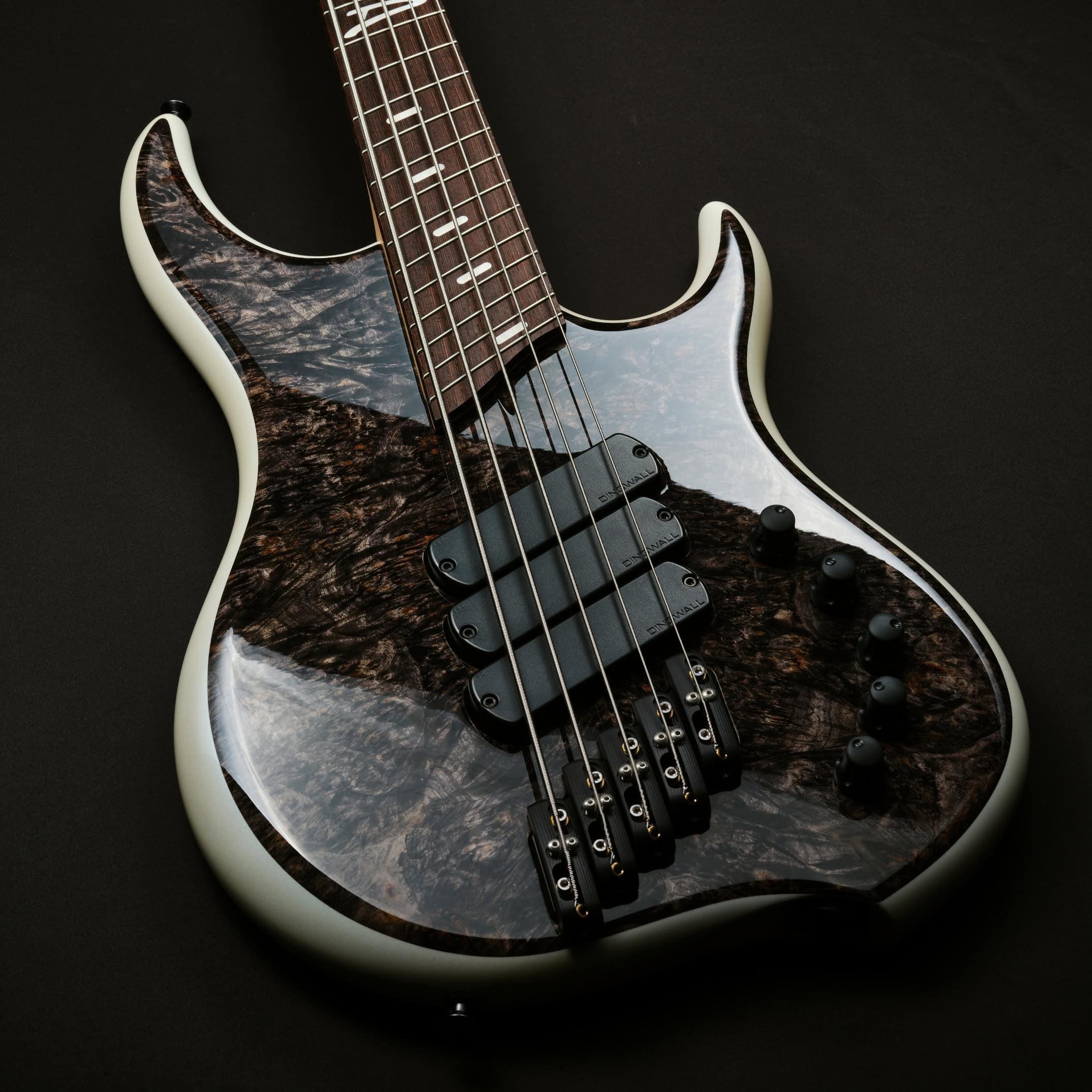
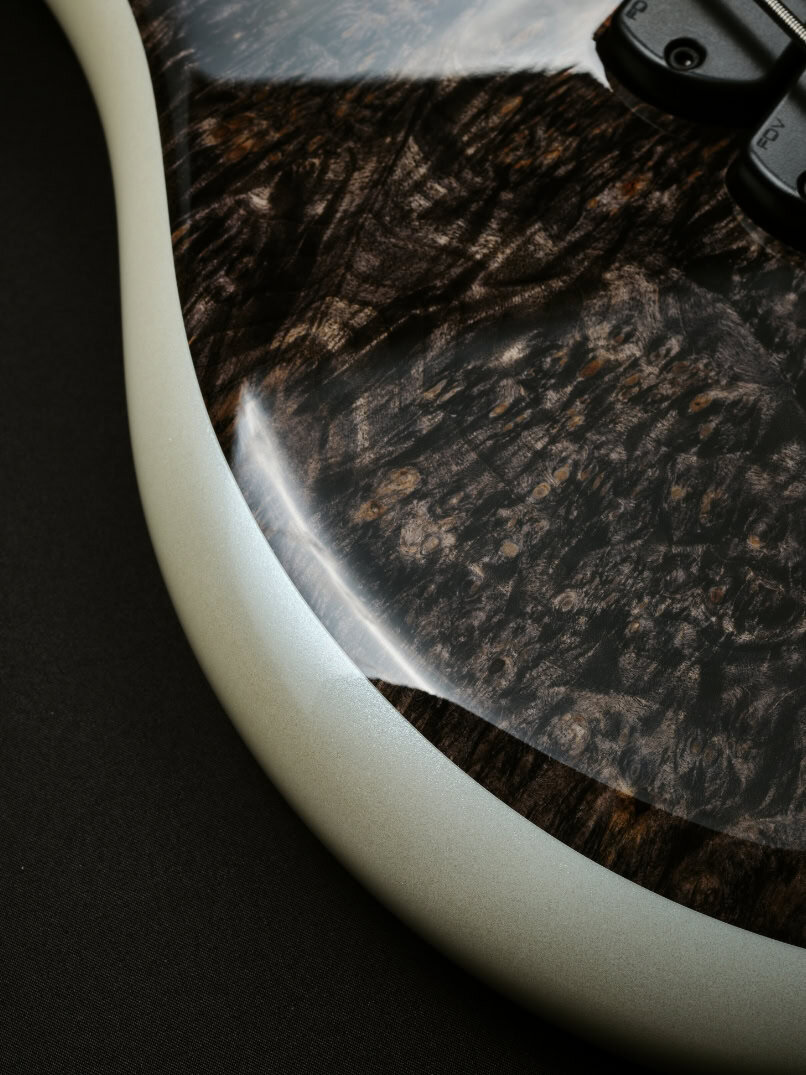
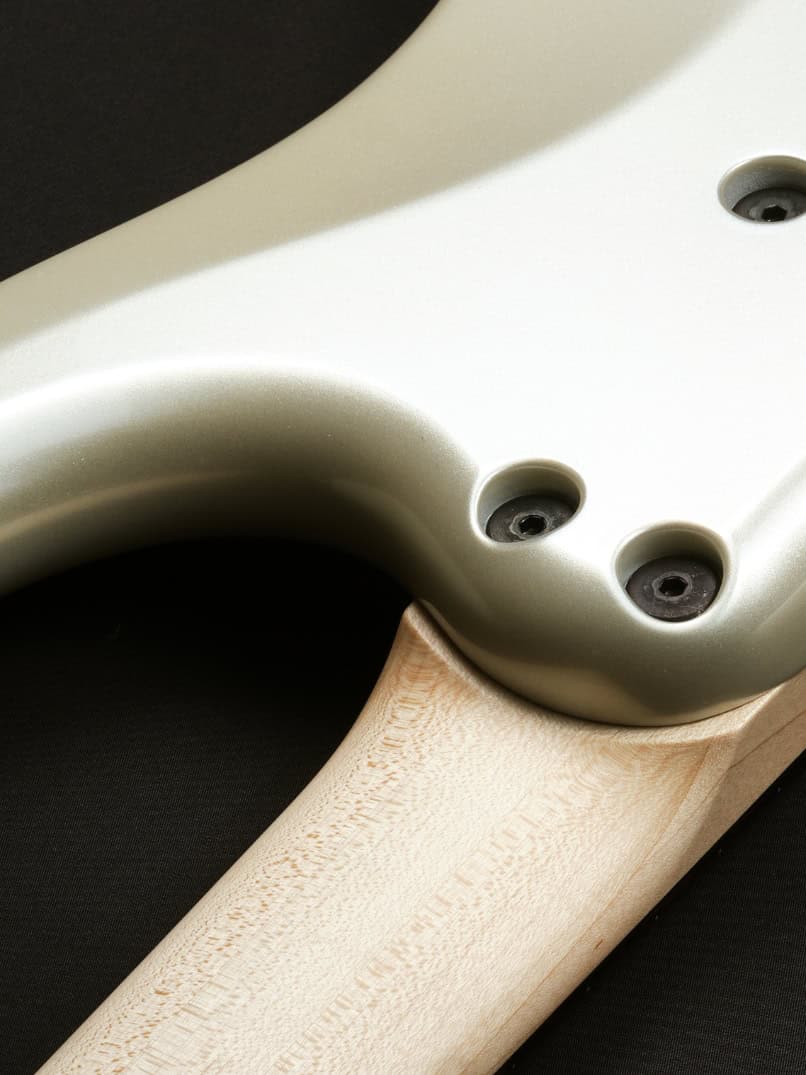
The body is dual density swamp ash, and that phrase is doing more work than it looks. Swamp ash is famously inconsistent — one plank can weigh half again as much as the next, which is why two basses of the same model can feel and sound like cousins rather than twins. Dingwall sort their ash by weight and build the body from two grades: dense wood on the bass side, light wood on the treble side. The heavy half adds sustain, clarity and punch exactly where the B and E-strings need it, and the light half keeps the D and G warm and open. It also means the overall weight and balance stay predictable from bass to bass.
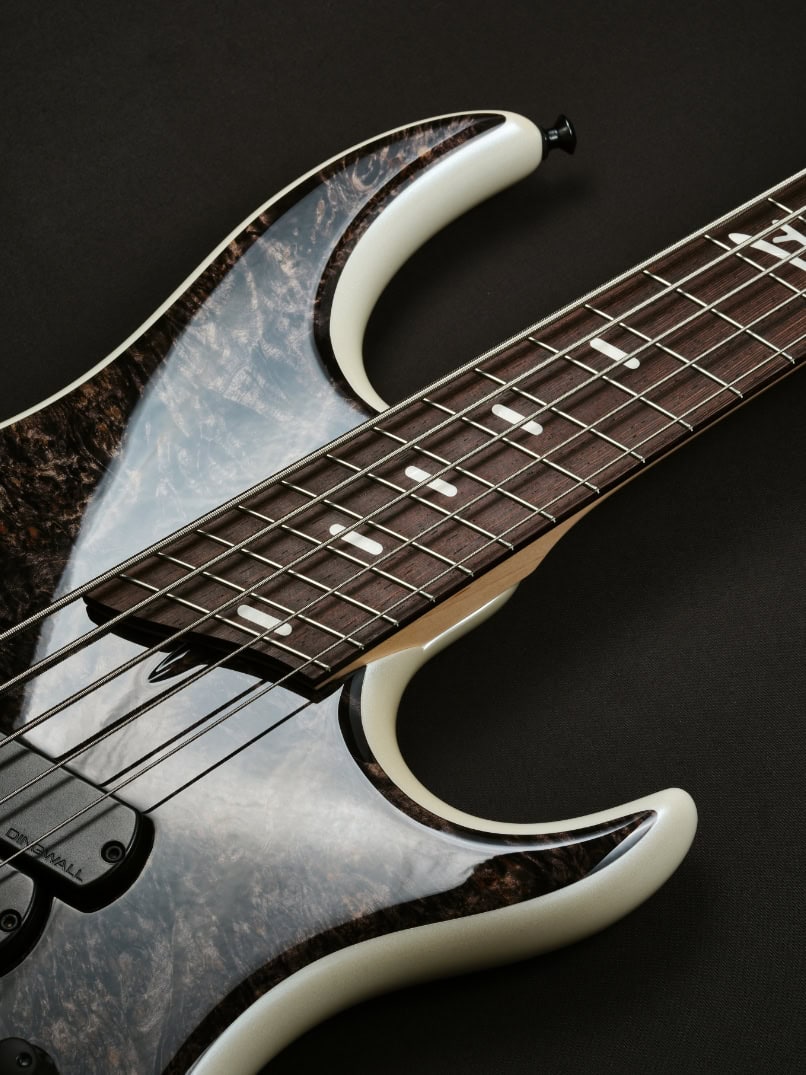
On top of that sits a maple burl cap in a charcoal burst that lets all the swirl, eyes and figure come through without the colour flattening it out. The back and sides are finished in Ducati White pearl, so the cream edge you see from the front is the back colour wrapping around rather than a binding strip. All of it under gloss polyester, which keeps the burl looking wet and deep. Photos genuinely do not do this one justice.
The neck is 5-piece maple with a wenge fingerboard, and that combination is our favourite Z-series spec. Wenge gives you the detailed treble response of ebony with the warmth and grain feel of rosewood, and it is a genuinely comfortable board to play on — open pored, dry, never sticky. Pairing it with a maple neck rather than an all-wenge build takes off some of the natural compression an all-wenge instrument has, so the bass breathes and stays open sounding. The carve is a thin, flattened C, the radius is compound from 7.5″ at the nut out to 16″ up top, and there is a Dingwall heavy duty double expanding truss rod with carbon fibre reinforcement holding it all straight.
The 24 frets are banjo size, and that is a deliberate tone decision, not just a feel one. Smaller frets mean less metal sitting between string and wood, so more of the string’s energy goes into the fingerboard — you get a woodier, more organic note. They also require narrower slots, which leaves more material in the board and makes the whole neck stiffer. The side benefit is that the board feels fast and even under your fingers, with white pearloid bar inlays and a “D” at the twelfth to keep you oriented.
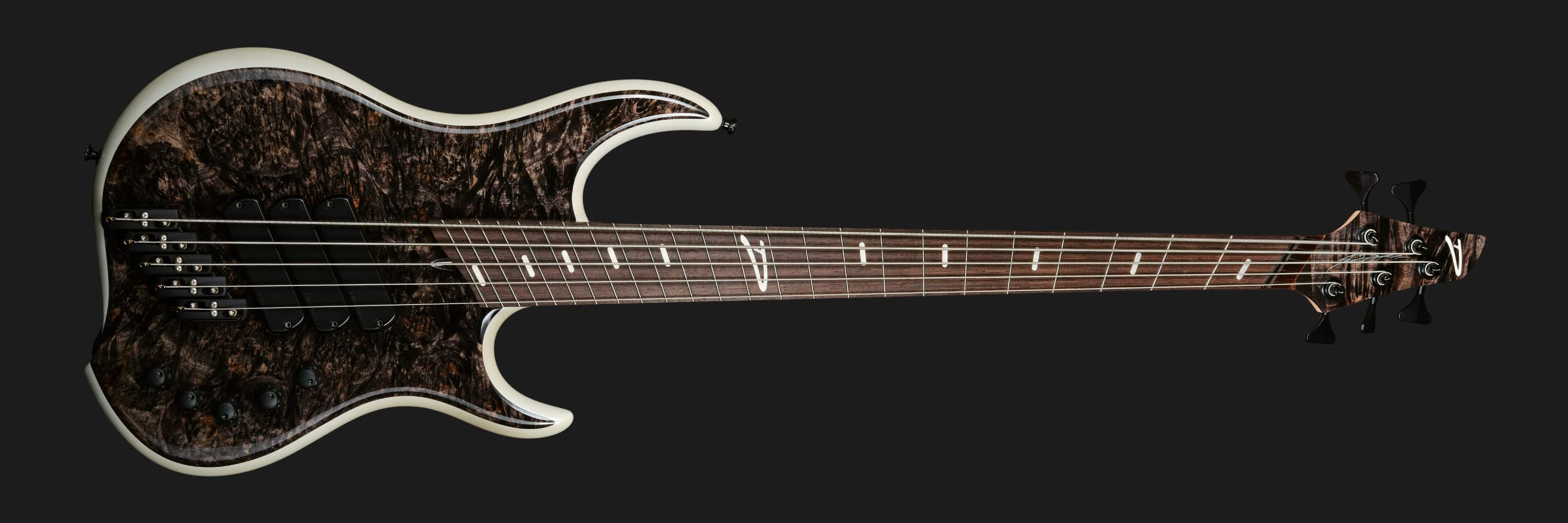
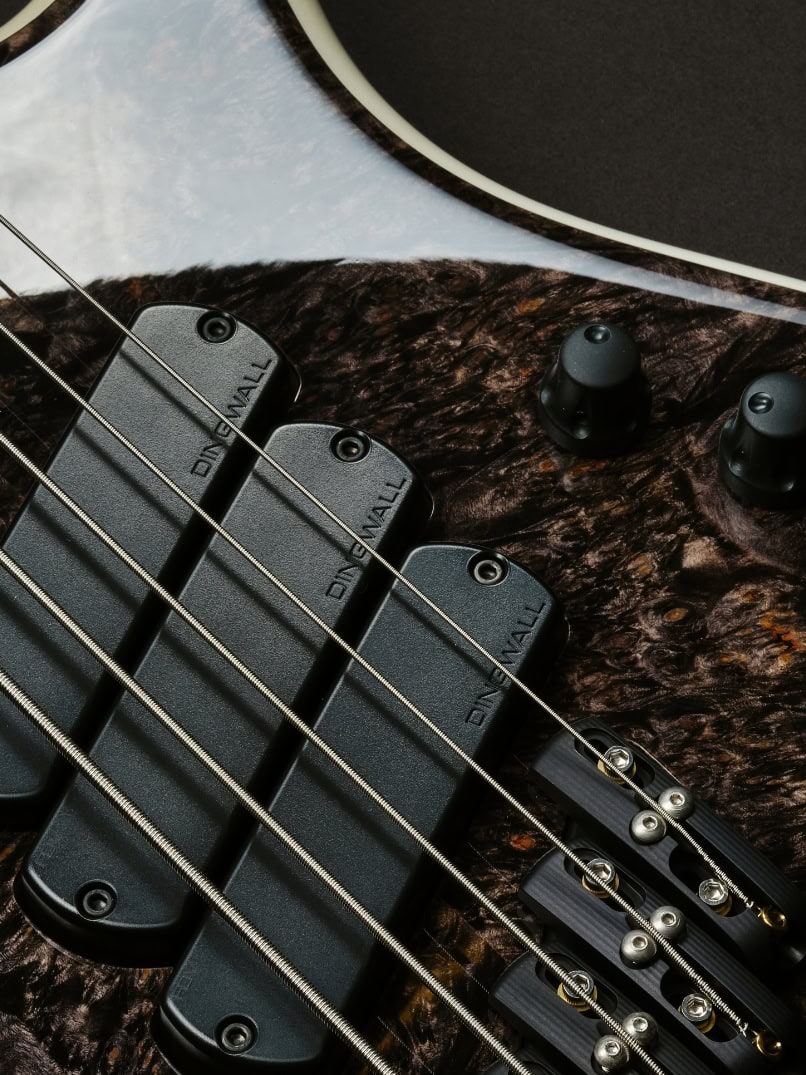
Three FDV Alnico pickups, which are the standard Z-series units and the ones we reach for when someone wants the more traditional side of Dingwall. Compared to the neodymium pickups they sound organic and a little rounder in the top end, but they still deliver the tightness, clarity and punch the fanned frets set up. Nothing about this bass is polite, but nothing about it is harsh either.
The rotary selector is where the Z3 earns its keep. Position 1 is the bridge pickup alone — narrow, aggressive, all attack. Position 2 puts bridge and middle in series for a fat MM-style bark that sits perfectly in a loud band. Position 3 runs bridge and neck in parallel, which is the classic J-style scoop with the note definition of a modern bass. Position 4 is the neck pickup on its own: deep, round and thick, the sound you want for fingerstyle and anything that needs to sit under a vocal. Four knob clicks and you have covered most of the tones people buy several basses to get.
Behind the pickups is a Glockenklang 3-band preamp with bass at 40 Hz, mids at 250 Hz and treble on top, plus a push/pull on the volume that drops you into passive mode with a treble cut. The Glockenklang is a hi-fi preamp in the best sense — it does not colour the pickups, it just makes room. Small moves do a lot, and the passive setting is a genuinely useful sound rather than a safety net, which is worth knowing if you play anywhere the power might be questionable.
Who is it for? Anyone who has been fighting a floppy low B and is done with it, and anyone who plays enough different material in a week that a one-trick bass gets frustrating. The Z3 covers modern and vintage-adjacent tones without ever pretending to be something it is not, and the fanned frets solve a real problem rather than being a party trick. Add the fact that this particular one looks like a piece of furniture from the front and a Ducati from the back, and it is a very easy bass to fall for. Ships in the Levy’s Dingwall gigbag.
Specs
Body
- Body Wood
- Dual Density Swamp Ash
- Top
- Maple Burl
- Color
- Charcoal Burst
- Back
- Ducati White
- Body Finish
- Gloss polyester
Neck
- Neck Wood
- 5-piece Maple
- Fingerboard
- Wenge
- Frets
- 24
- Strings
- 5
- HeadStock
- Compound angled/Matching finish
- Neck Finish
- Satin Polyurethane
- Fingerboard Radius
- 190mm – 406mm, 7.5″ – 16″ Compound
- Fret Size
- Banjo size
- Nut
- 45.5 mm – 1.8″
- Neck Carve
- Thin, flattened C shape
- Truss Rod
- Dingwall heavy duty truss-rod, Carbon Fiber (double expanding)
- Scale Lenght
- B 37" E 36.25" A 35.5" D 34.75" G 34"
- Tuning
- Standard
- Position Inlays
- yes
- Inlay Material
- White pearloid speedo bar inlays with "D" on 12th fret
Weight
- Weight
- 4.2Kg
Electronics
- Preamp
- Glockenklang 3-Band
- Pickup
- FDV
- Pickup type
- Alnico
- Controls
- Volume Push Pull Active/Passive, Bass +/- 14dB@40Hz, Mid +/- 9dB@250Hz, Treble +18dB@18KHz/Passive cut
- Pickup Switching
- Rotary pickup selector — 1-Bridge, 2-Bridge/Middle series (MM-Style), 3-Bridge/Neck Parallel (J-Style), 4-Neck
Hardware
- Bridge
- Dingwall Custom made
- Bridge Spacing
- 18mm - .709"
- Tuning Machines
- Hipshot Ultra-lite
- Control knobs
- Dingwall custom soft-touch formula
- Hardware Finish
- Black
- Jack
- Neutrik Locking
Accessories
- Accessories
- Levys Dingwall Gigbag