Sandberg Basses TT4 Lake Placid Blue High Gloss
In stock
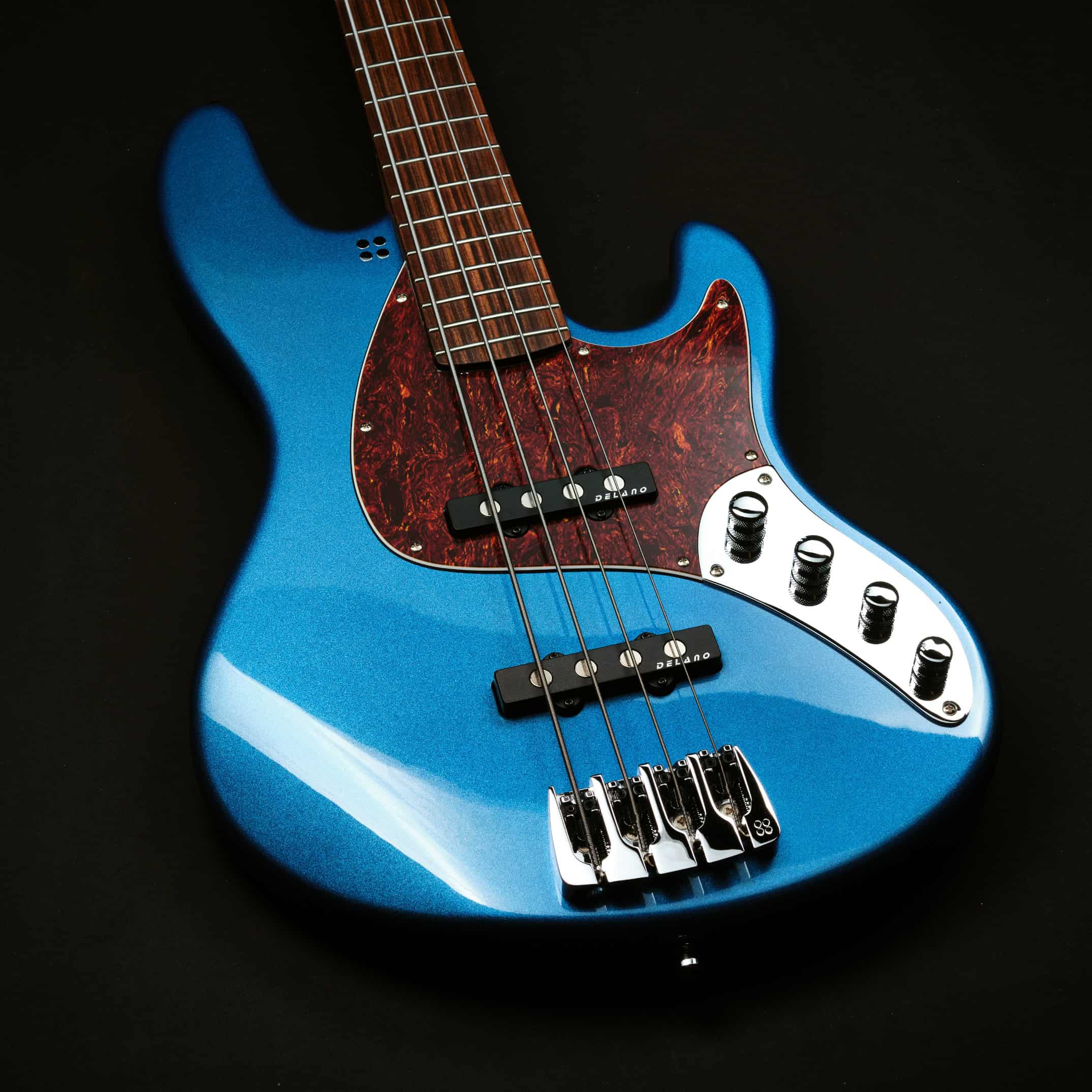
Sandberg builds in Braunschweig, and the California TT is the model where they stop improving on the Jazz Bass and start simply building a very good one. The outline, the two single coils, the four-knob control plate — all of it is familiar. What isn’t familiar is the standard of the work underneath: fret ends you can run your hand over without noticing them, a neck pocket with no gap in it, and a finish that has been levelled rather than just sprayed.
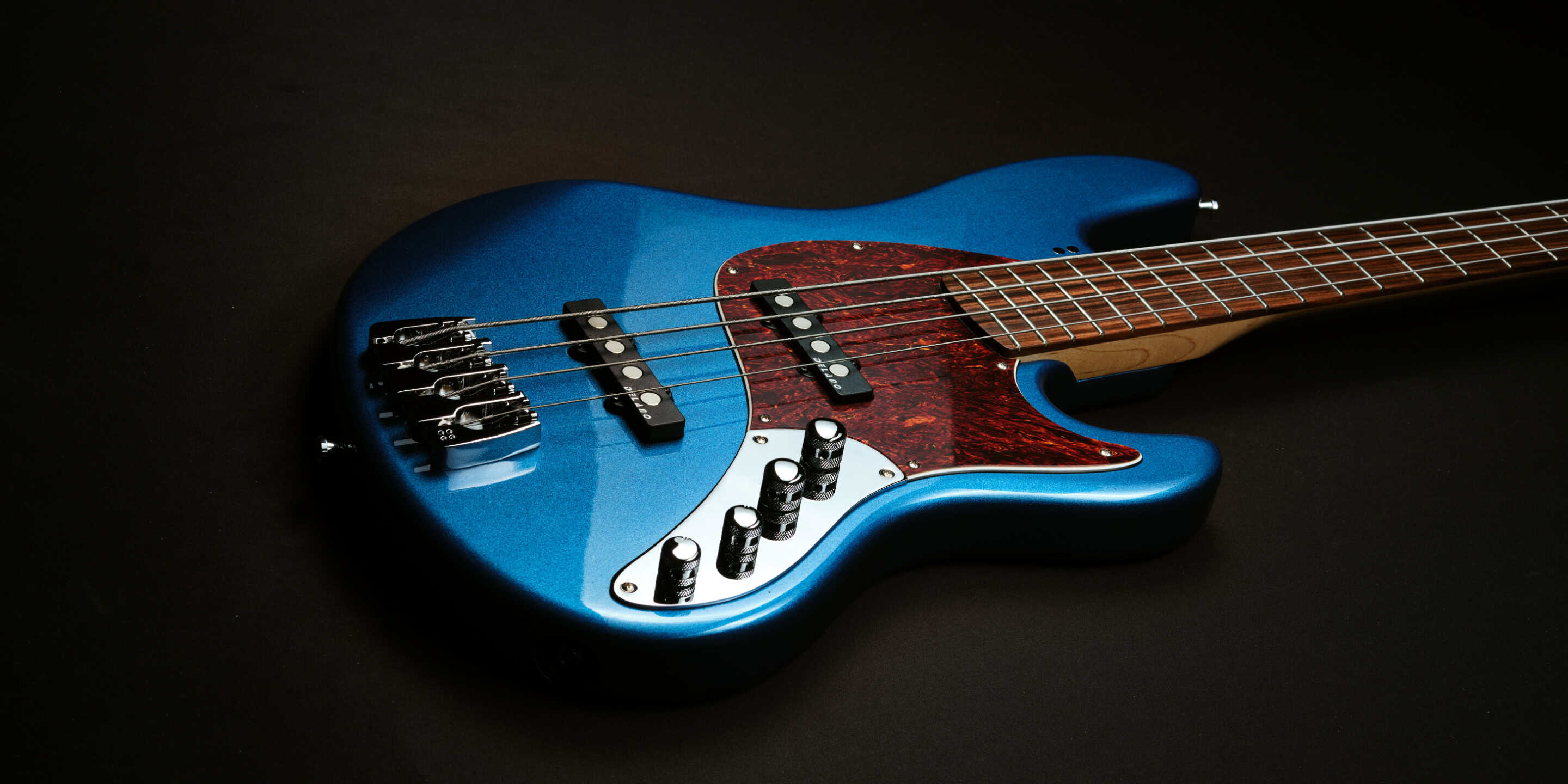
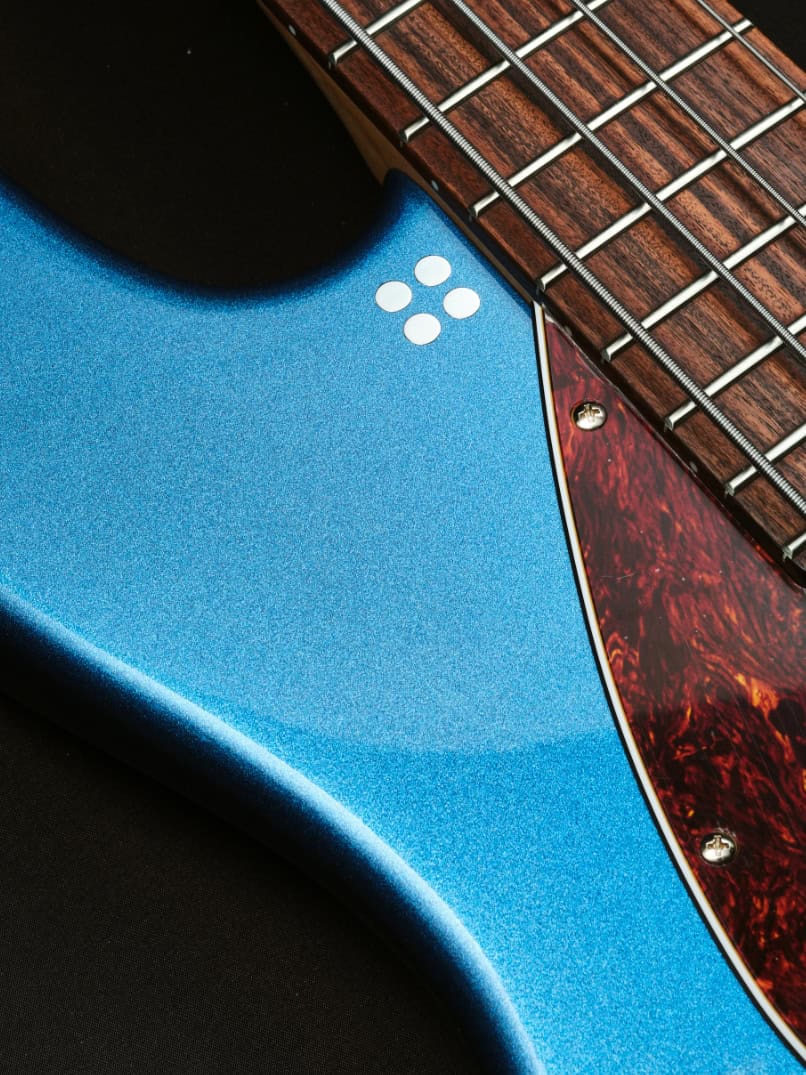
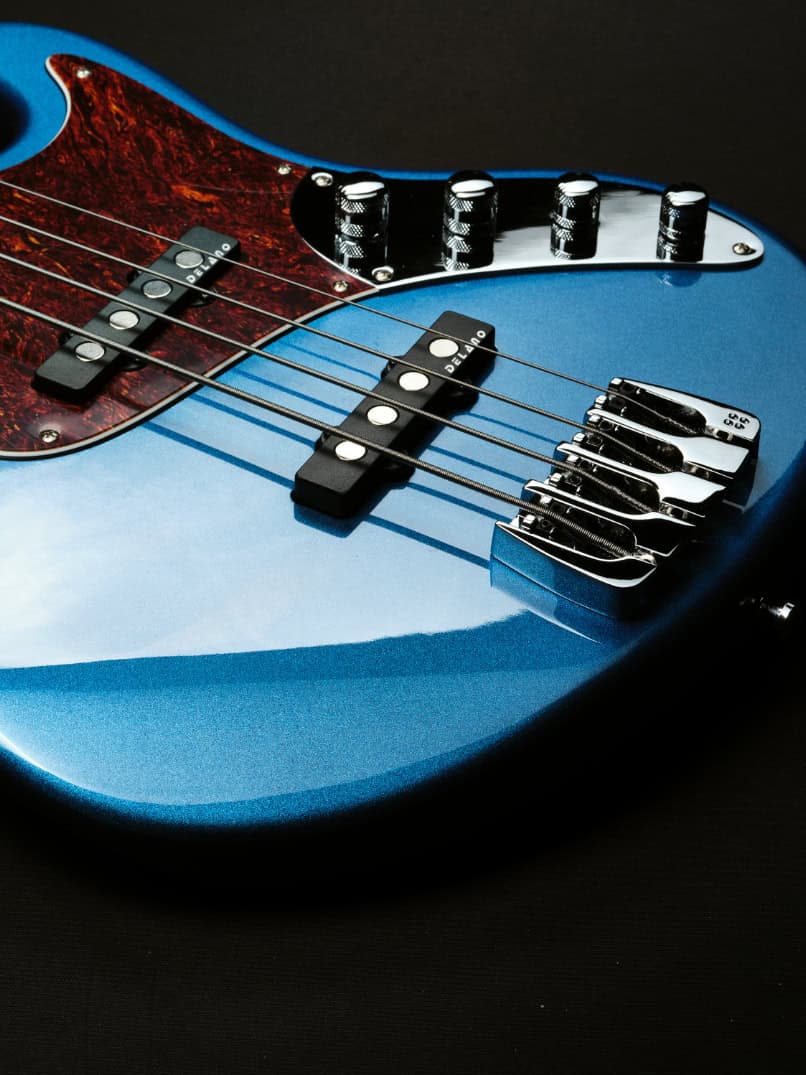
This one is in Lake Placid Blue High Gloss — the metallic blue that goes almost silver where the light catches the upper bout and drops to a deep petrol in the shadow of the horns — with a tortoise pickguard and chrome hardware. It is the classic combination for a reason: the warm browns and ambers in the guard stop the blue from reading cold, and the chrome ties the two together. High Gloss is Sandberg’s clean tier, so there is no ageing, no checking and no wear here. It looks exactly like what it is: a brand new instrument that somebody took their time over.
Two Delano single coils, a 2-band EQ you can switch out of the circuit entirely, and a neck that plays like it has already been broken in. This is the Jazz bass you buy when you're done buying Jazz basses.
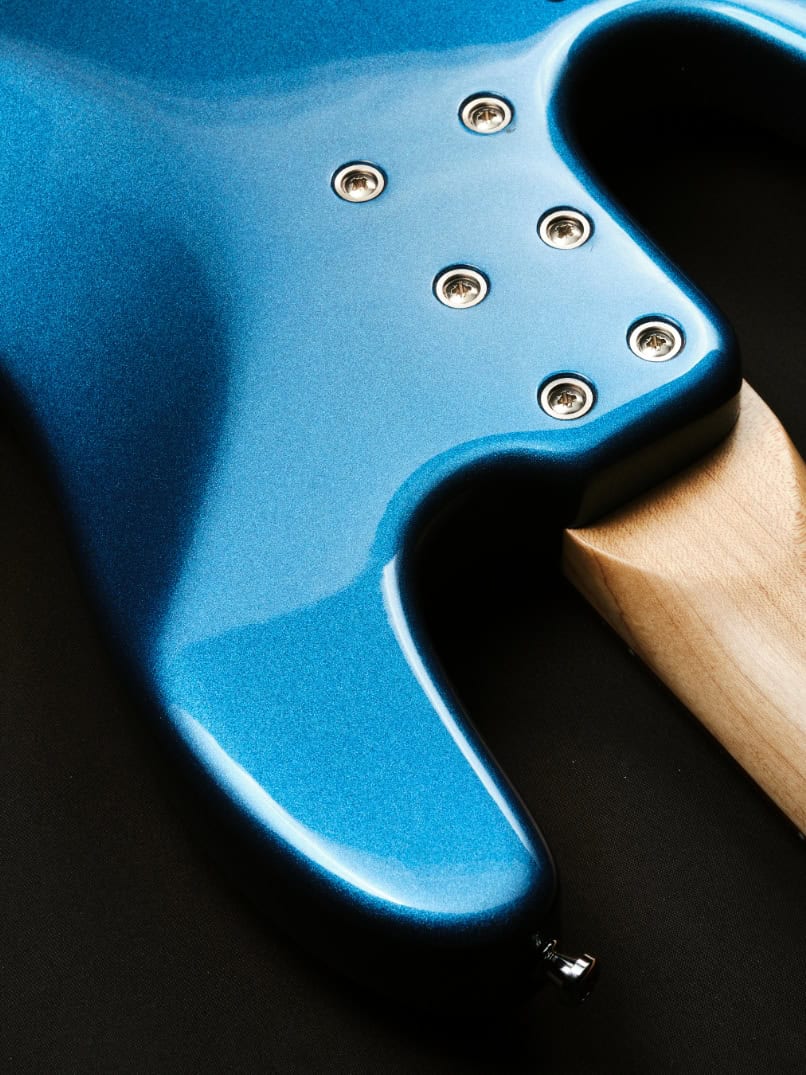
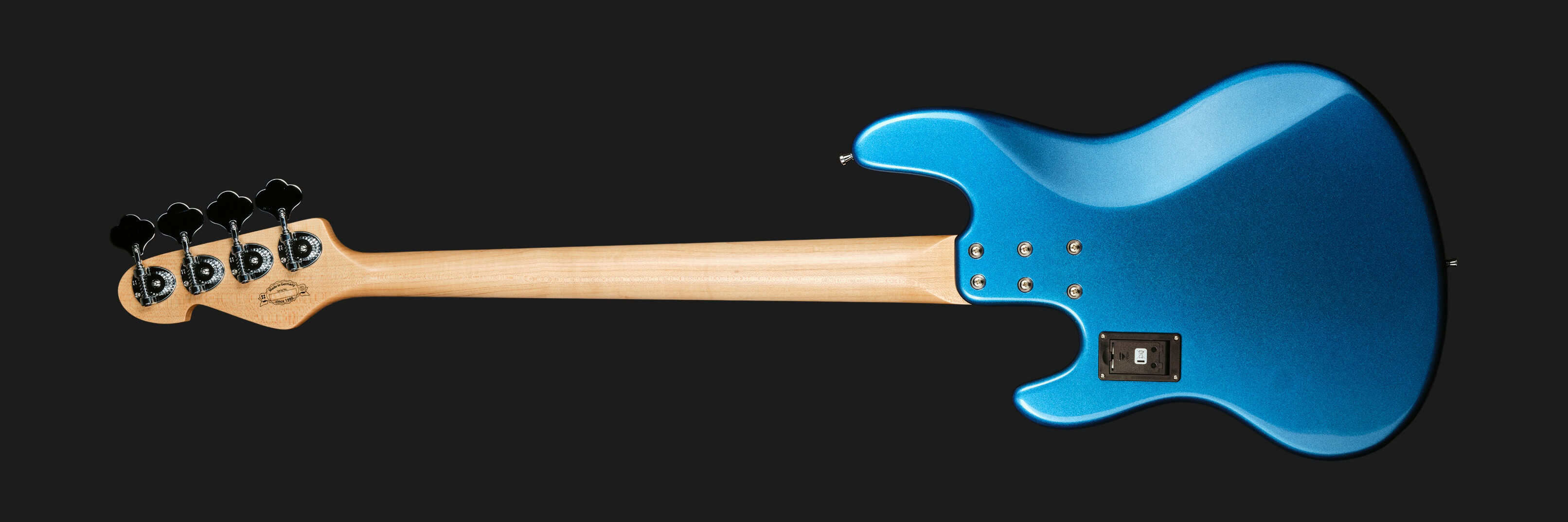
The body is alder, and it is the right choice for a bass built around two single coils. Alder is the most even-handed wood in this family: a firm, quick low end that doesn’t bloom or wander, a midrange that sits far enough forward to hold a line in a loud band, and a top end that stays open without going brittle. It doesn’t stamp a character of its own onto the sound the way ash scoops it or mahogany thickens it. It gets out of the way, which means what you hear is the pickups and the neck rather than the lumber, and it is the reason an alder Jazz bass will sit convincingly in almost any style you point it at.
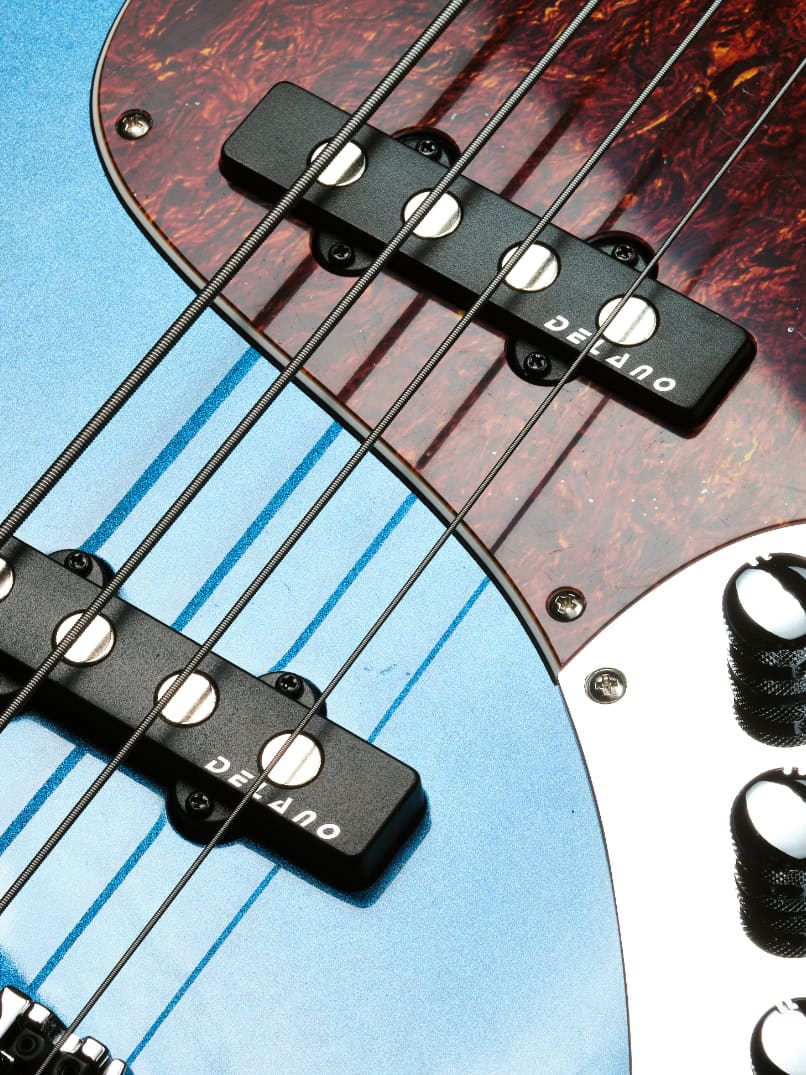
Over the top of it goes the High Gloss finish. Sandberg’s gloss work is properly thin for a poly finish, and the metallic flake in Lake Placid Blue is laid down evenly enough that the colour shifts smoothly across the curve of the body instead of clouding in the corners. The tortoise guard is a real celluloid-look pattern with depth to it — mottled reds and dark browns rather than a flat printed sheet — and it is the detail that makes this bass look considered rather than catalogue-standard.
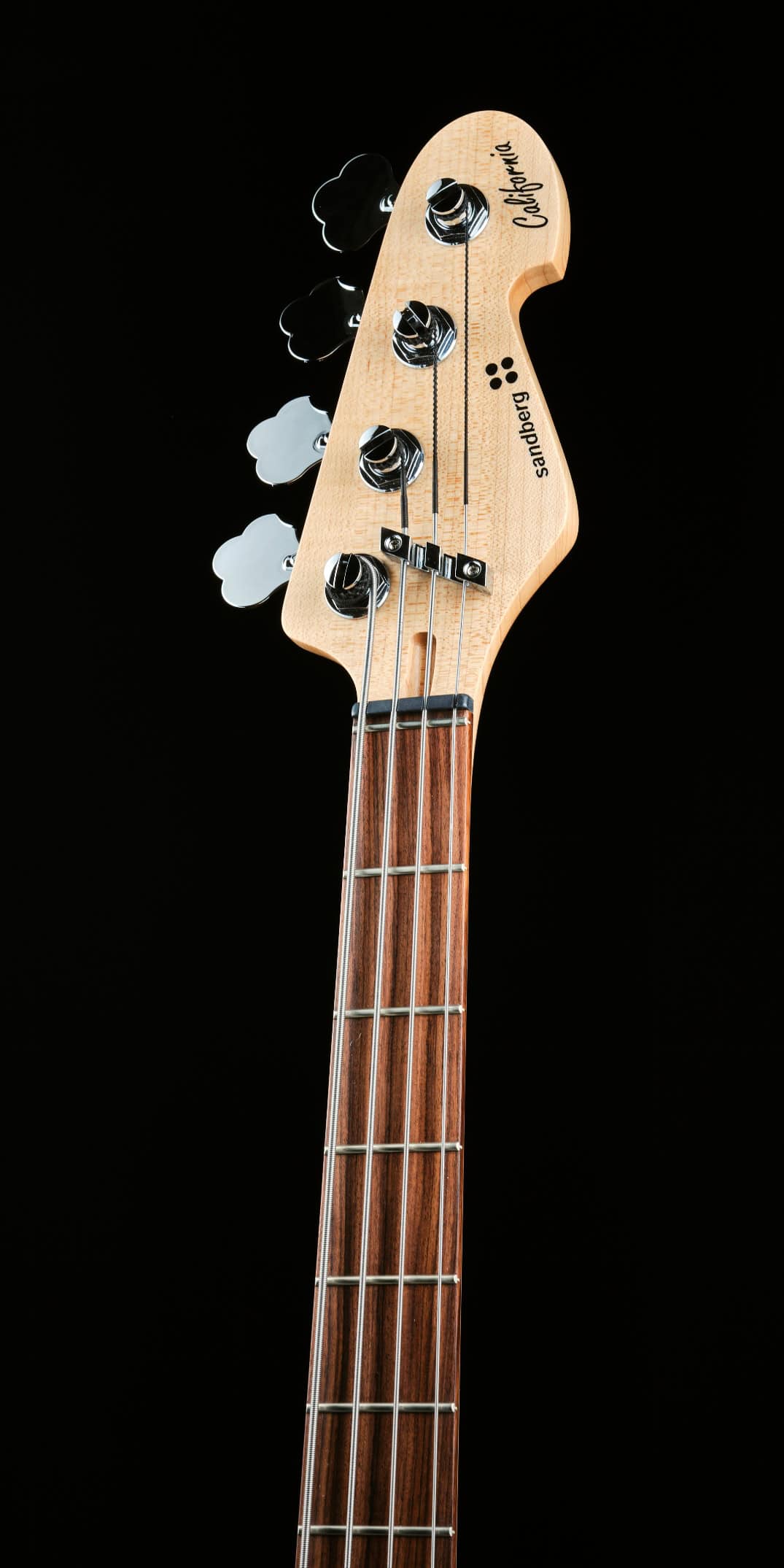
The neck is Canadian hard rock maple, bolted on with six screws rather than the usual four. That extra pair of fixings is not decoration: it spreads the clamping load across the heel, keeps the joint from working loose over years of seasonal movement, and couples the neck to the body more tightly, which you hear as a little more sustain and a firmer fundamental. It is carved to a C profile — full enough to fill your hand, not so deep that it slows you down — and finished so the back of it stays fast when the room gets hot.
The fingerboard is Pau Ferro with dot inlays. Pau Ferro sits between rosewood and ebony in both density and voice: harder and tighter-grained than rosewood, so the attack has more definition and the note speaks a fraction faster, but without the glassy top end that ebony can bring. On a passive-capable bass that matters, because there is no preamp to add clarity back in — the board has to supply it. There are 22 frets in 2.7 mm wire over a 14″ radius, which is flatter than a vintage Jazz board and stays flat all the way up, so you can set the action genuinely low without the higher registers choking out on bends. The 34″ scale and 39.5 mm nut keep everything in familiar territory.
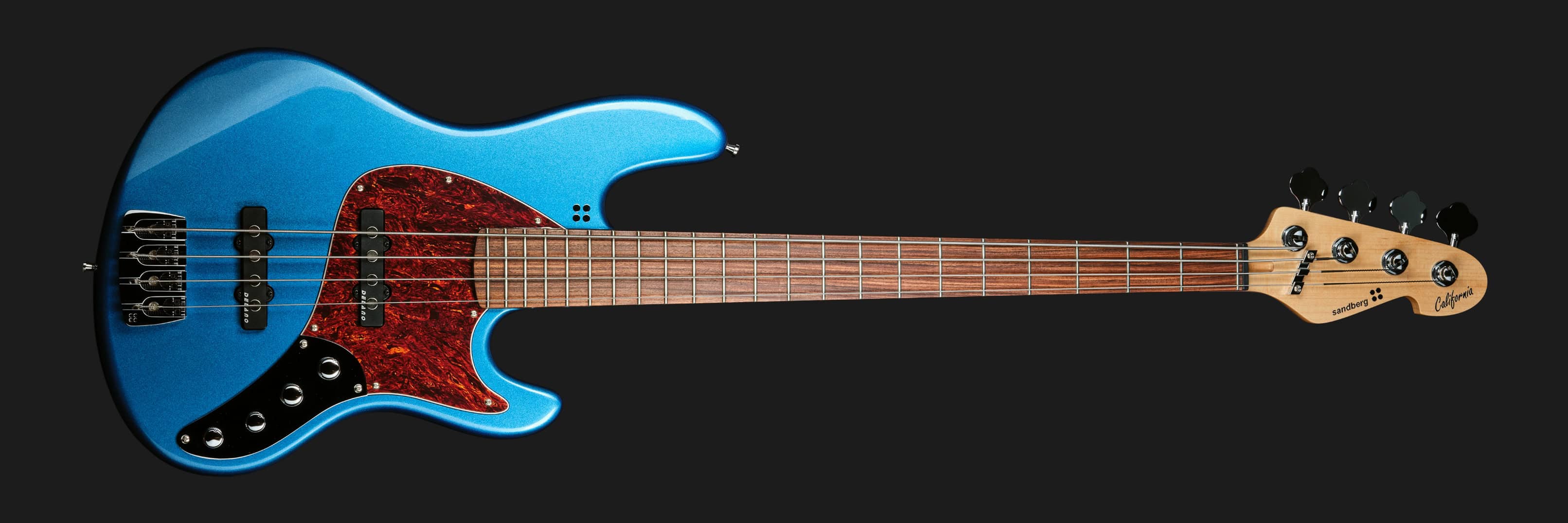
The pickups are Delano JMVC single coils in both positions, made in Germany. Delano wind tighter and more consistently than most, and the JMVC is their take on the classic Jazz single coil rather than a modern reinvention of it: even output across all four strings, a vocal midrange with real growl in it, and a top end with air rather than hiss. Solo the neck pickup and you get a round, fat, almost P-adjacent weight. Solo the bridge and you get the nasal, mid-forward bark that cuts through a horn section without touching an EQ. Run both wide open and the two coils hum-cancel each other, and you land on the scooped, springy both-pickups sound that has been on more records than anyone can count.
Where the TT4 pulls away from a straight vintage copy is the circuit. The four knobs are Volume, Balance, Treble and Bass, running a Sandberg 2-band EQ — and crucially the whole preamp switches out, dropping the bass into fully passive operation with a passive tone control. That is not a gimmick you use once. Active, you get boost and cut on both ends: enough treble to make a fresh set of rounds sing for slap, enough bass to fill out a sparse trio without leaning on the amp. Passive, the battery leaves the signal path entirely, the output softens, and the bass gets the slightly compressed, springy response that only a passive Jazz bass has. Two genuinely different instruments, one switch, and if the battery ever dies mid-set it costs you a knob-pull rather than the gig.
The hardware is chrome throughout and chosen for function. Sandberg’s own bridge has enough mass under the saddles to feed sustain and low-end definition back into the body, with string spacing adjustable between 19 and 20.5 mm so you can set the strings where your right hand actually wants them rather than where the factory left them. The lightweight tuners keep mass off the headstock, which on a 34″ four-string means the bass hangs level on a strap instead of pulling for the floor over a two-hour set.
This is the bass for the player who wants a Jazz bass to be the only bass they bring. It covers passive vintage and modern active from the same body without compromising either, it is built to a standard that will still be holding up in twenty years, and the Lake Placid Blue and tortoise combination means it looks like something rather than looking like everything else on the rack. It ships in the Sandberg gigbag, and this exact spec — High Gloss, alder, Pau Ferro, tortoise — is a one-off on our floor.
Specs
Body
- Body Wood
- Alder
- Color
- Lake Placid Blue metallic
- Finish
- High Gloss
Neck
- Neck
- Canadian Hard Rock Maple, bolt-on (6-bolt)
- Fingerboard
- Pau Ferro with dot inlays
- Neck Profile
- C-shape
- Fretboard Radius
- 14"
- Scale
- 34" (864 mm)
- Frets
- 22
- Fret Size
- 2.7 mm
- Nut
- 39.5 mm
- Strings
- 4
- Headstock
- Standard
- Tuning
- Standard
Weight
- Weight
- TBA
Electronics
- Pickups
- 2 x Delano JMVC single coils, neck and bridge
- Preamp
- Sandberg 2-band EQ, switchable active / passive
- Controls
- Volume, Balance, Treble, Bass
Hardware
- Bridge
- Sandberg
- Tuners
- Sandberg lightweight
- Hardware Finish
- Chrome
- Bridge Spacing
- 19 to 20.5 mm
- Pickguard
- Tortoise
- Includes
- Sandberg gigbag