Sandberg Basses VC5 Central Black Hardcore Aged
In stock
VC5 Central Black Hardcore Aged
One pickup, one job
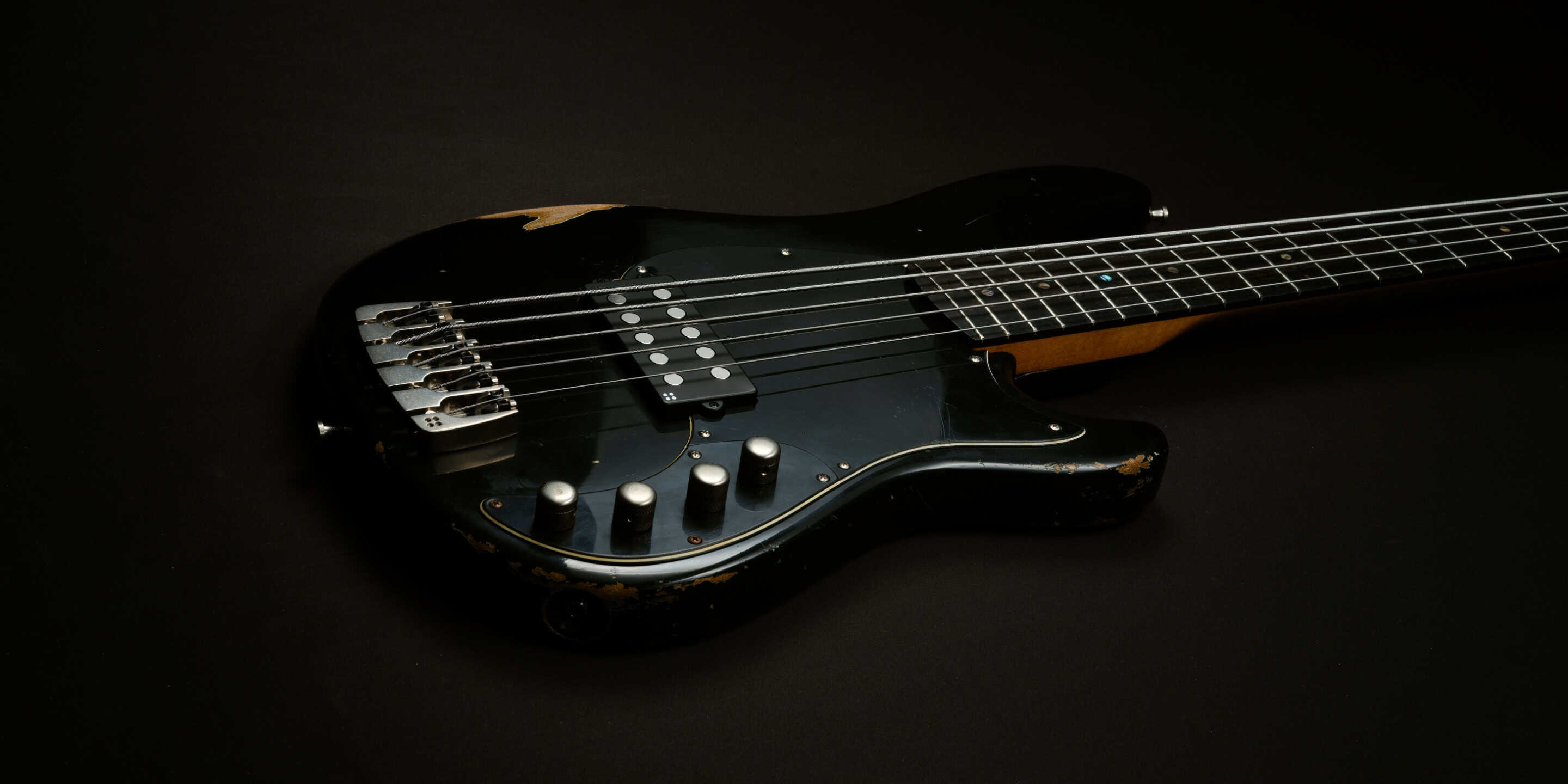
This is the VC5 Central in Black Hardcore Aged from Sandberg, out of Braunschweig, Germany. It’s 3.9 kg. Most of the Sandberg line is built around two pickups and a blend knob. The Central, however, isn’t.
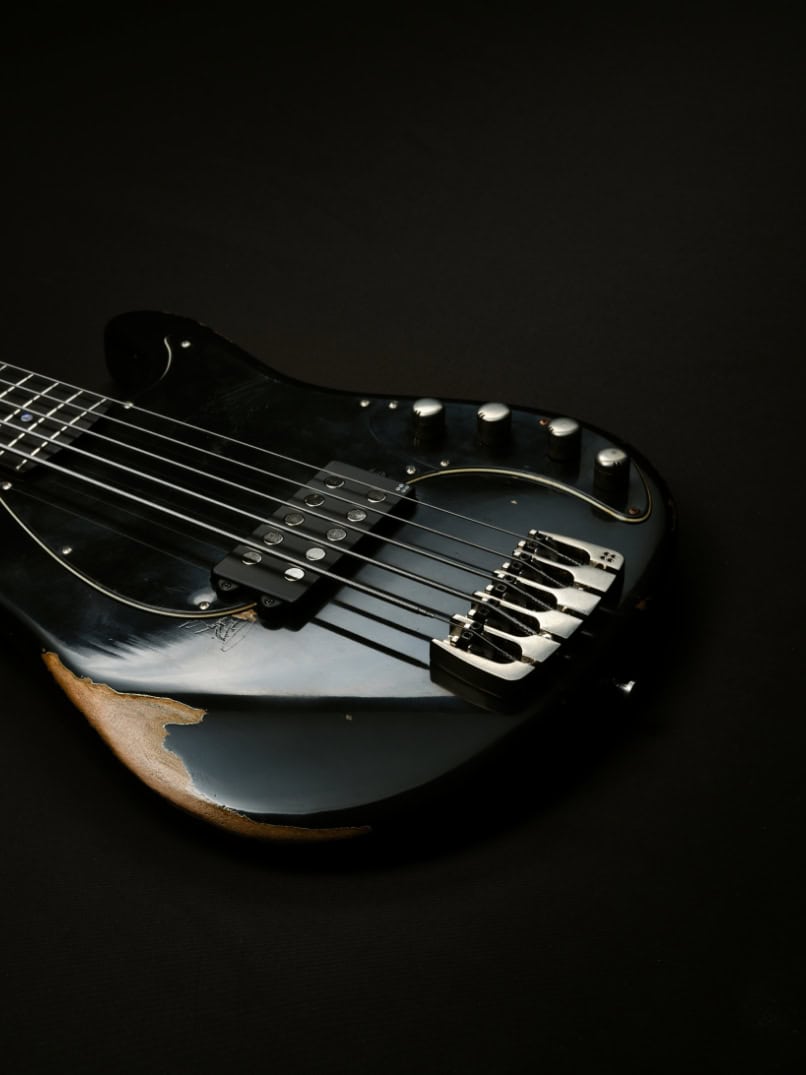
One humbucker sits in the sweet spot between the end of the neck and the bridge, and four knobs run the show. As a result, the whole bass is built for one job: a big, muscular, mid-forward note exactly where you want it. If you’ve ever wanted that sound with a proper five-string low B underneath it, this is the bass that does it.
Black, Hardcore Aged
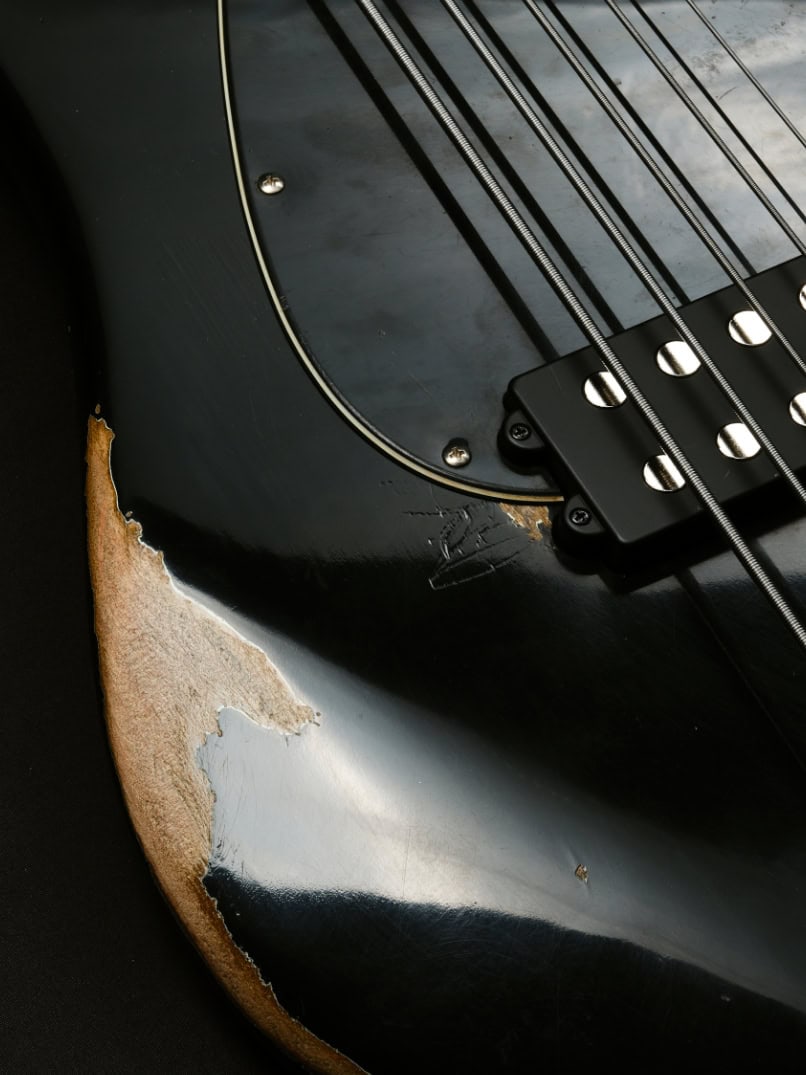
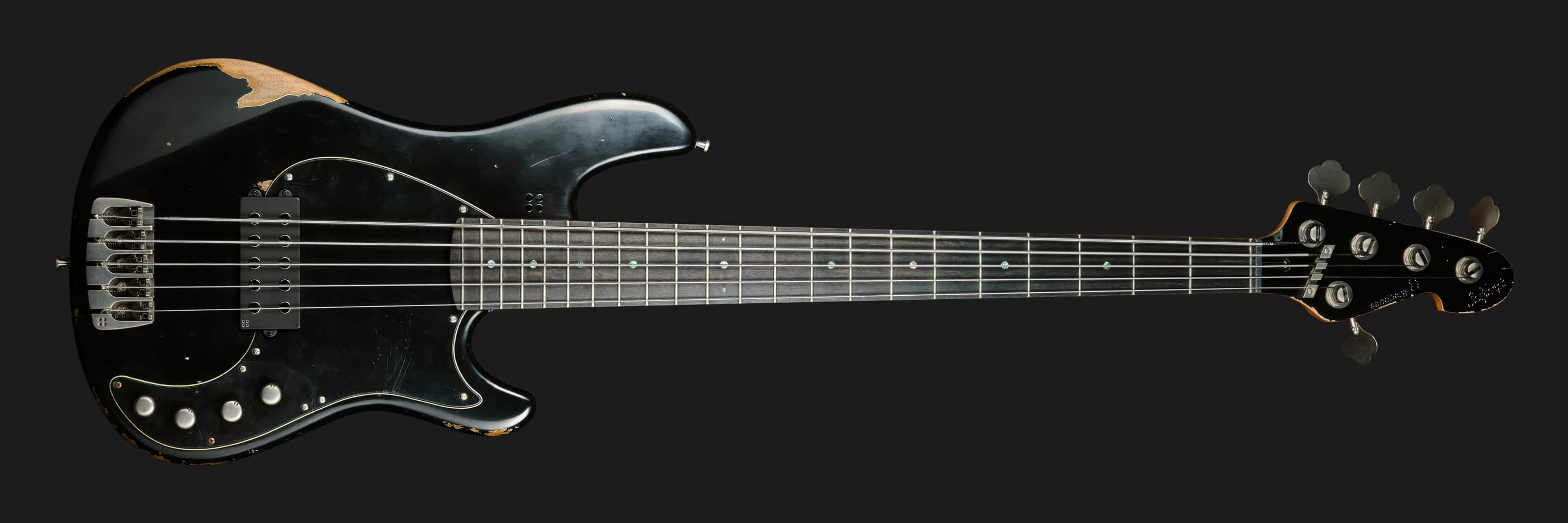
This one is black over an alder body with the Hardcore Aged treatment. In other words, it’s Sandberg’s heavy relic level, not the gentle version.
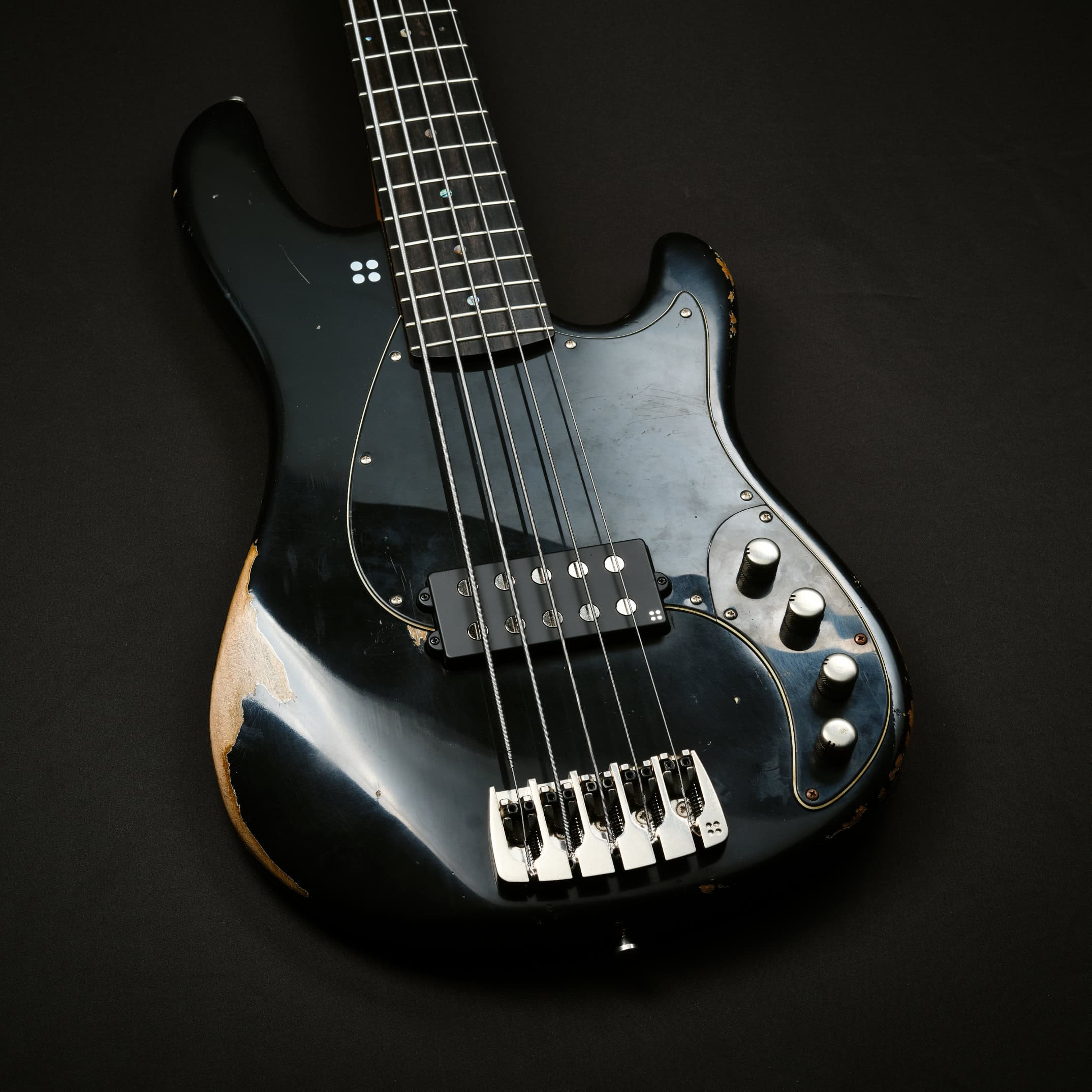
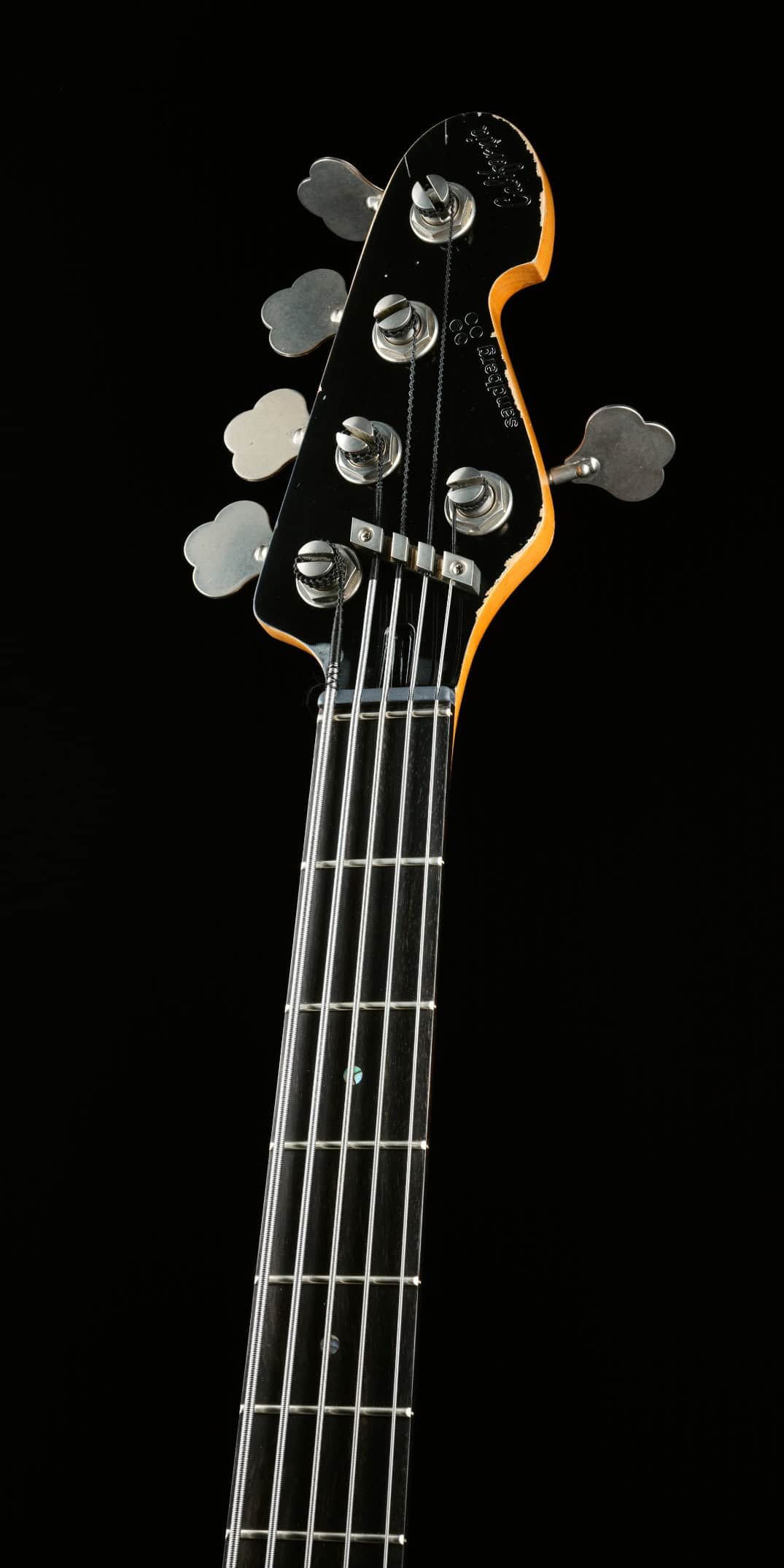
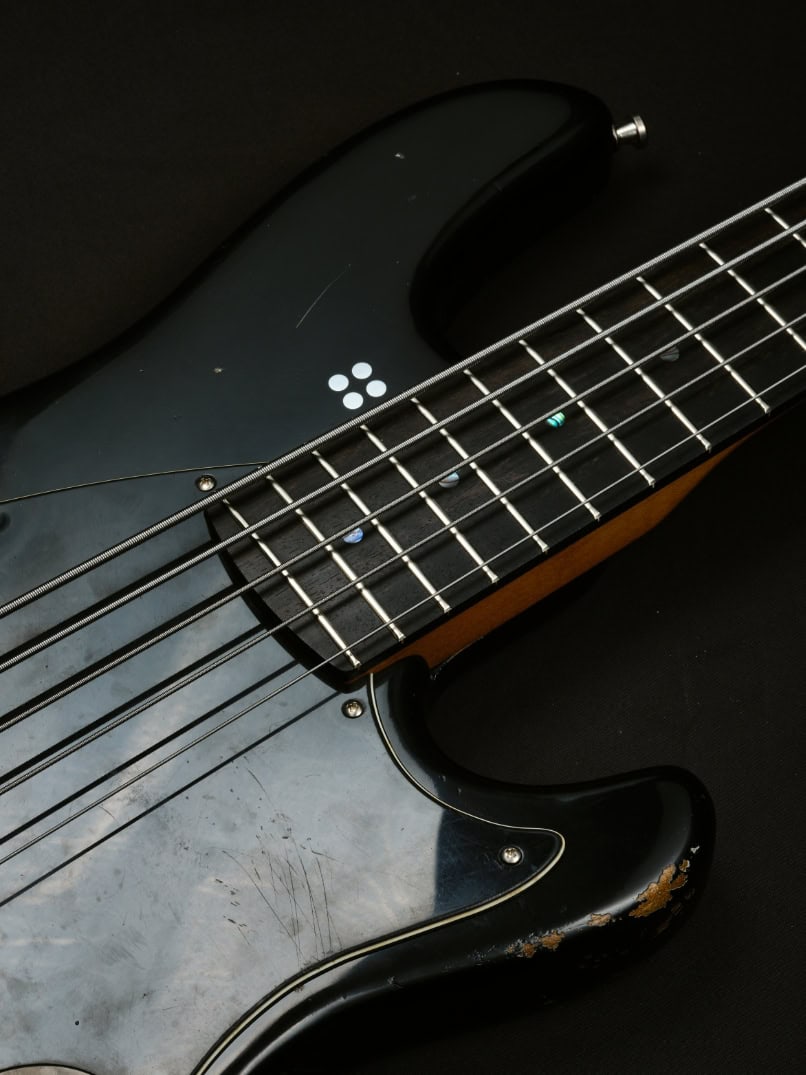
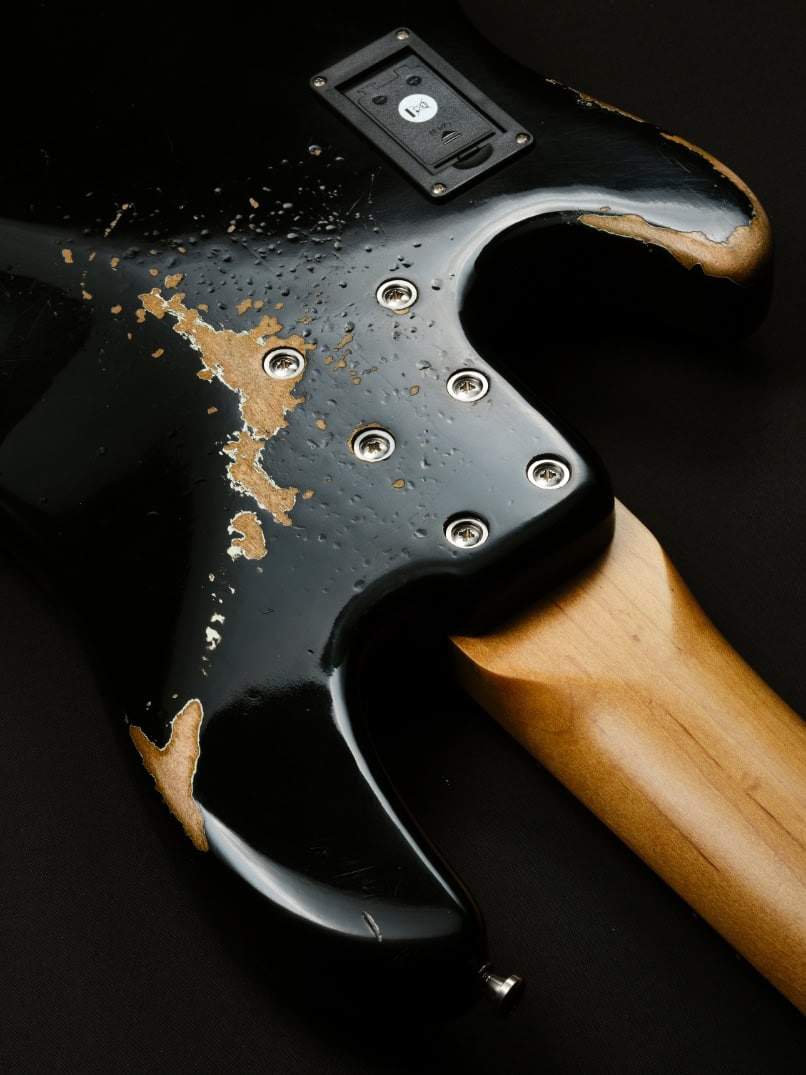
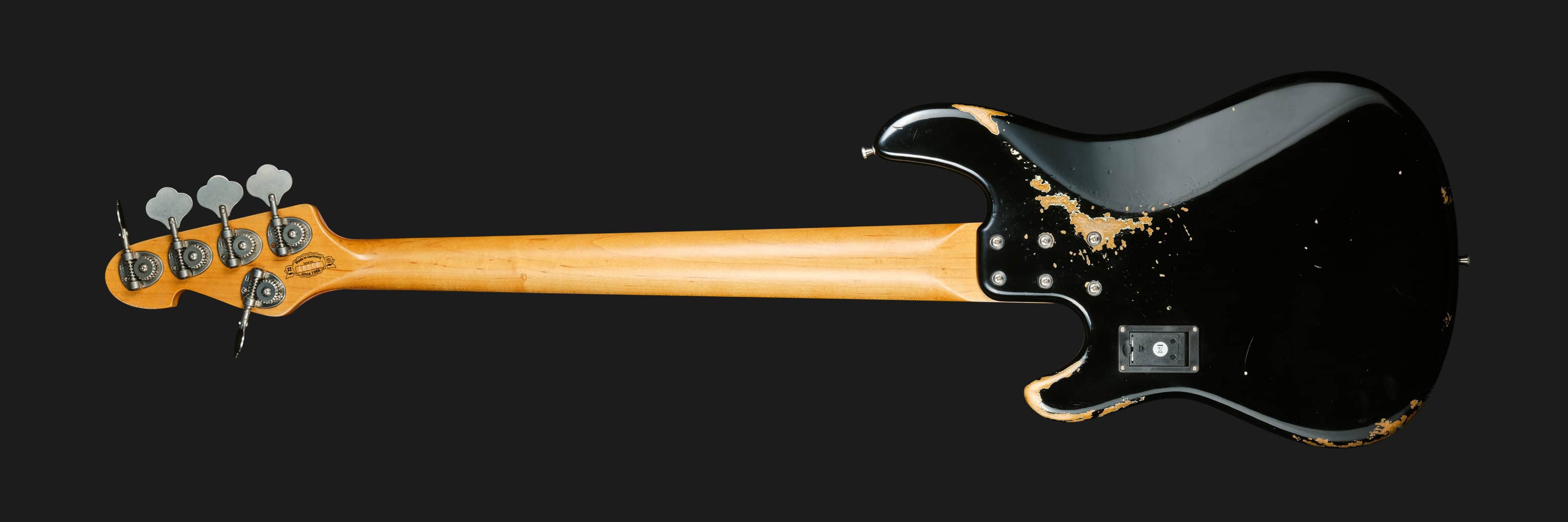
For example, the finish is worn through to bare wood along the forearm contour, the lower bout and the back, where a belt buckle would have got to it. Furthermore, the pickguard is dulled and scuffed and the hardware has lost its shine. Likewise, the black headstock face is checked and chipped.
It looks like a bass that has been out five nights a week since the nineties. In fact, it came off the bench this way. Therefore the twenty years of guilt about the first scratch have already been taken care of, right?
Built in Braunschweig
Holger Stonjek has been building basses in Braunschweig since 1986. Sandberg’s reputation rests on doing the boring things properly, at a price that boutique builders can’t match. For instance, that means fret ends, neck pockets, level finishes and setups that arrive playable. Indeed, the aging is done by hand on top of that standard, not instead of it.
35-inch scale, one humbucker, no blend knob. The B string is tight enough to actually use, and the mid control does the rest.
Body, Neck & Woods
Alder body
The body is alder, and on a single-pickup bass that choice matters more than anywhere else. Because there’s no second pickup to blend with, there’s no way to dial around the wood. Therefore the body has to be even-handed on its own.
For example, you need a firm low end that stays put instead of blooming. In addition, the midrange has to sit far enough forward to hold a line through a loud band. Finally, the top end should open up without getting brittle.
Alder does all three and adds no character of its own. In my opinion, that’s exactly what you want under a humbucker that already has plenty. Moreover, where the finish is worn through you can see the wood itself: pale, plain and tight-grained, the way good alder looks.
6-bolt Canadian maple neck
The neck is Canadian hard rock maple, bolted on with six screws rather than the usual four. However, that extra pair isn’t for show. It spreads the load across the heel and stops the joint working loose over years of seasonal movement.
Furthermore, it couples the neck to the body more tightly, which means a firmer fundamental and longer sustain. The profile is a flat C, full enough to fill your hand without slowing it down. Meanwhile, the back of the neck is left thin in finish, so it stays fast when the room gets hot.
On top of that, the heel is sculpted. Consequently, you can actually reach the last frets, not just in theory.
Ebony board and zero fret
The fingerboard is ebony, which is a step up from the pau ferro or maple the Central normally comes with. Ebony is the hardest, densest board wood in common use, and its job here is definition. Basically, it sharpens the front of every note, speeds up the attack and keeps the fundamental from smearing.
On a five-string that’s not a cosmetic upgrade. After all, the low B is the string that most often turns to mush, and a dense board is one of the few things that really tightens it. The abalone dots flash green against the black wood, and there’s a zero fret at the top of the board.
That zero fret is worth a paragraph on its own. Instead of resting in a slotted nut, the open strings sit on a fret exactly like every other note. As a result, an open E sounds like a fretted E, with the same material under the string, same attack and same decay.
Moreover, the action at the first fret is set by fret height rather than by how well somebody cut a nut slot. That nut slot is one of the most common causes of a stiff-feeling first position. Behind the zero fret sits a separate string guide that sets the spacing. In short, two parts do the two jobs, and each one only does what it’s good at.
35″ scale
The scale is 35 inches, and on this bass that’s the whole point. Basically, the extra inch over standard raises the tension on the B string at pitch. Because of that tension, the low B speaks right away, stops when you tell it to and stays clear rather than woolly when you dig in.
In contrast, the 45 mm nut and 22 frets keep everything else in familiar five-string territory. Consequently, the only thing your left hand really notices is that the low notes are tight and defined.
Electronics, Sound & Feel
Sandberg Plus humbucker
The pickup is Sandberg’s own Plus humbucker. It’s mounted where a single pickup gives you the most useful compromise between the fat, round sound near the neck and the tight, aggressive one at the bridge.
Because it’s a real humbucker, it’s quiet under stage lighting and dimmer packs. Moreover, it puts out enough level to drive the front end of an amp on its own. The sound is thick in the low mids, punchy rather than polite, and it responds a lot to where your right hand sits.
For example, play back by the bridge and it gets nasal and cutting. On the other hand, move up over the end of the fingerboard and it fattens up a lot. Slap sounds like the record you’re thinking of, whereas fingerstyle sits in a mix without any help.
3-band EQ and passive mode
Behind it is Sandberg’s 3-band EQ: Volume, Treble, Middle and Bass, with boost and cut on all three bands. For me personally, the midrange is the control that earns its place on a single-pickup bass. Indeed, with no blend knob the mids are where you shape the whole personality of the bass.
Push them and you get a barking, forward sound that cuts through two guitars. In contrast, pull them and you land on the scooped, glassy sound that slap players want.
The volume knob is a push-pull that takes the preamp out of the circuit and drops the bass into passive mode. That’s a really different sound: softer, springier, more compressed. Besides, it’s a working musician’s insurance. In fact, a flat battery costs you a knob-pull, not the gig.
Aged Sandberg hardware
The hardware is Sandberg’s own throughout, aged to match the body. The bridge has real mass under the saddles, which feeds sustain and low-end definition back into the body. In addition, the string spacing adjusts between roughly 18.5 and 20 mm. Therefore you can set the strings where your right hand wants them, not where the factory left them.
The lightweight tuners keep weight off the headstock, and on a 35″ five-string that’s not a small thing. Indeed, it’s the difference between a bass that hangs level on a strap and one that dives over a two-hour set.
Our take
I would say this is the bass for the player who has decided what they sound like. It doesn’t give you five different sounds. Instead, it gives you one very good one, with an EQ to place it and a passive mode to soften it, in a body that already looks like it’s been on the road.
The 35″ scale and ebony board make the low B tight enough for modern rock, gospel and anything played to a click. Meanwhile, the alder body and the humbucker keep it warm enough for everything else. Finally, Hardcore Aged Centrals in black with an ebony board are not a stock item, and this is the only one we have. Back to the groove.
Specs
Body
- Body Wood
- Alder
- Color
- Black
- Finish
- Hardcore Aged
- Pickguard
- Black 3-ply
Neck
- Neck
- Canadian hard rock maple, bolt-on (6-bolt)
- Neck Profile
- Flat C-shape
- Fingerboard
- Ebony with abalone dot inlays
- Scale
- 35" (889 mm)
- Frets
- 22, plus zero fret
- Fret Size
- 2.7 mm
- Nut
- 45 mm
- Strings
- 5
- Headstock
- Standard, black face
- Tuning
- Standard
Weight
- Weight
- 3.9Kg
Electronics
- Pickups
- 1 x Sandberg Plus humbucker
- Preamp
- Sandberg 3-band EQ, switchable active / passive
- Controls
- Volume (push/pull active/passive), Treble, Middle, Bass
Hardware
- Bridge
- Sandberg
- Bridge Spacing
- 19 mm (adjustable 18.5 to 20 mm)
- Tuners
- Sandberg lightweight
- Hardware Finish
- Chrome, aged
- Includes
- Sandberg gigbag