Sandberg Basses VM4 Mahogany Bubinga Top
In stock
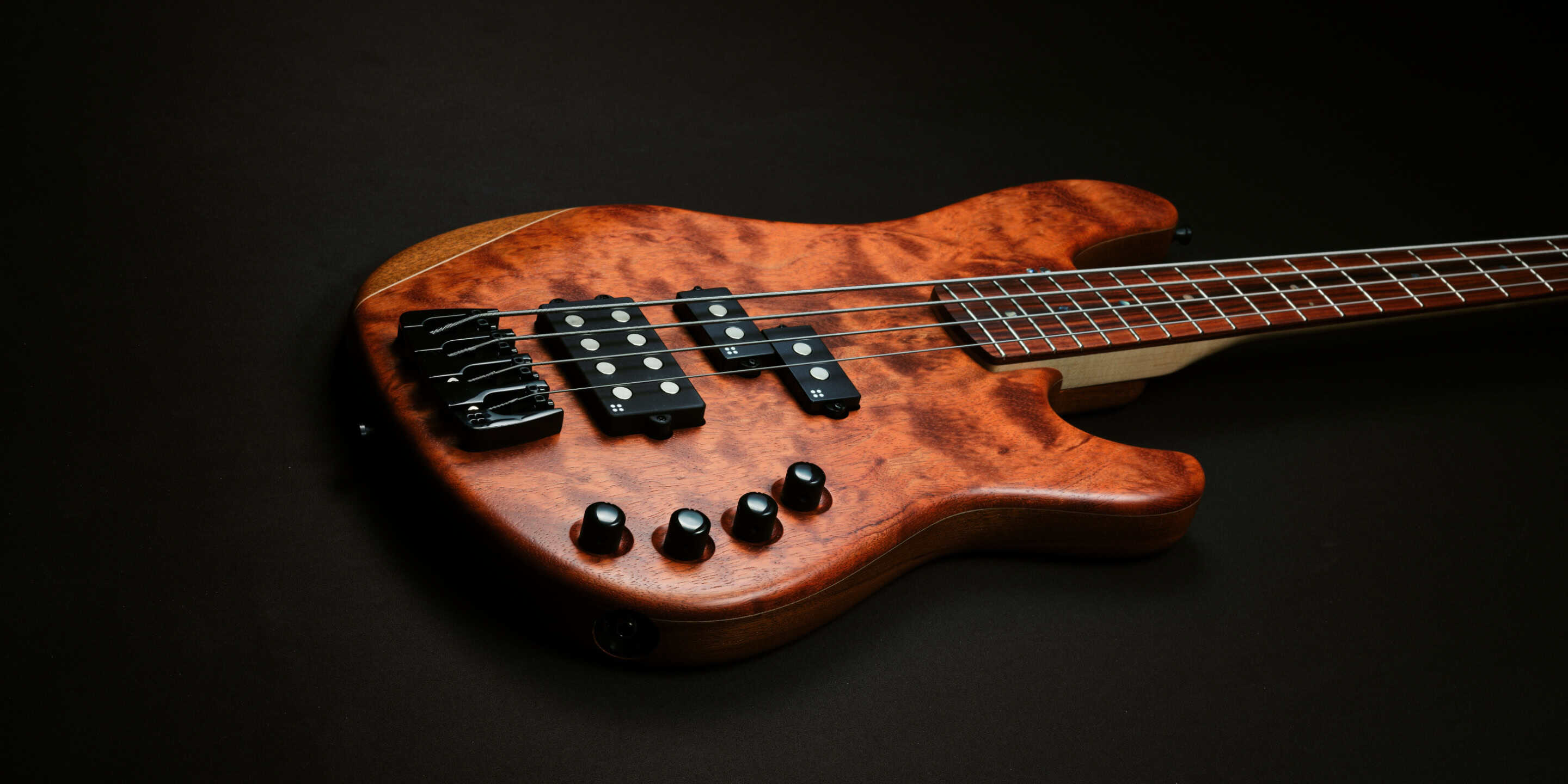
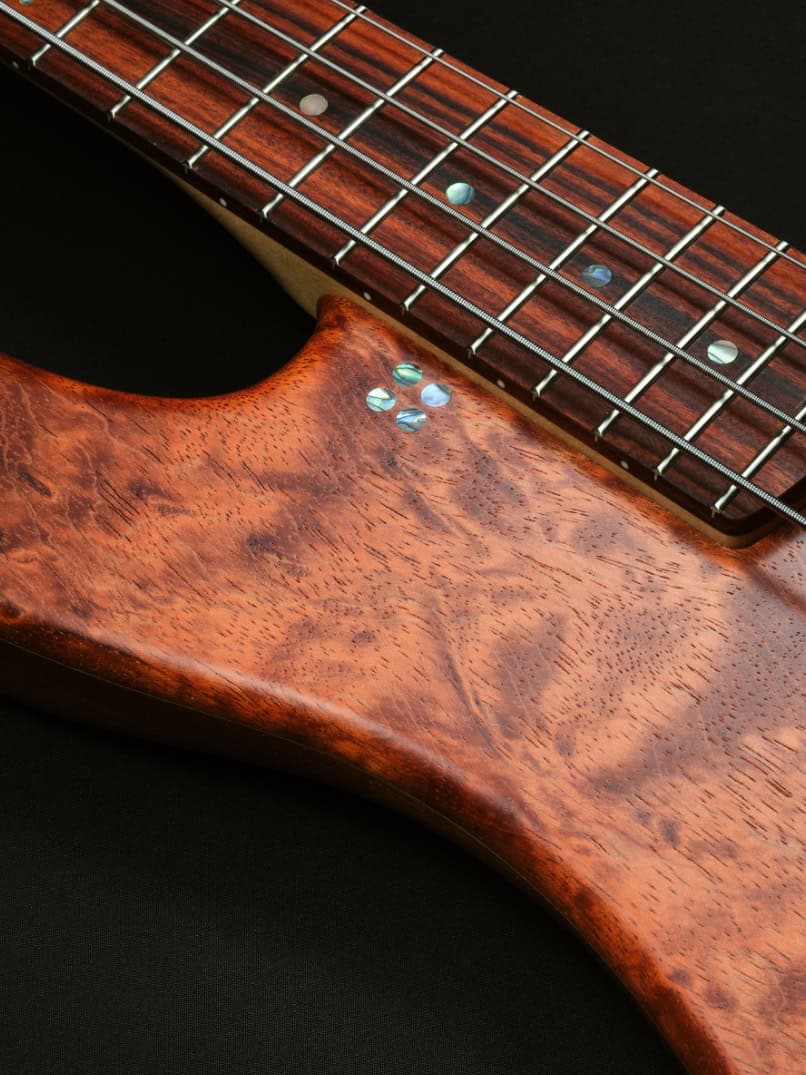
Most Californias leave Braunschweig wearing paint. This one doesn’t. A mahogany body with a figured bubinga top, finished matte so you can still feel the grain under your forearm, and not a scrap of colour anywhere on it — the only decoration is the wood itself and the abalone dots in the pau ferro board.
The top is properly figured, the kind of dense rolling pommele pattern that shifts as you move under a light rather than sitting flat on the surface, and Sandberg carried it up onto the headstock so the bass reads as one piece from body to tuners. Everything else went black: tuners, bridge, pickups, control knobs. It’s the most understated way this bass gets built, and at 3.84 kg it’s a comfortable one to stand behind for a three-hour set.
A California with the paint left off — the mahogany brings the warmth, the bubinga puts the attack back on top, and the VM electronics do the rest.
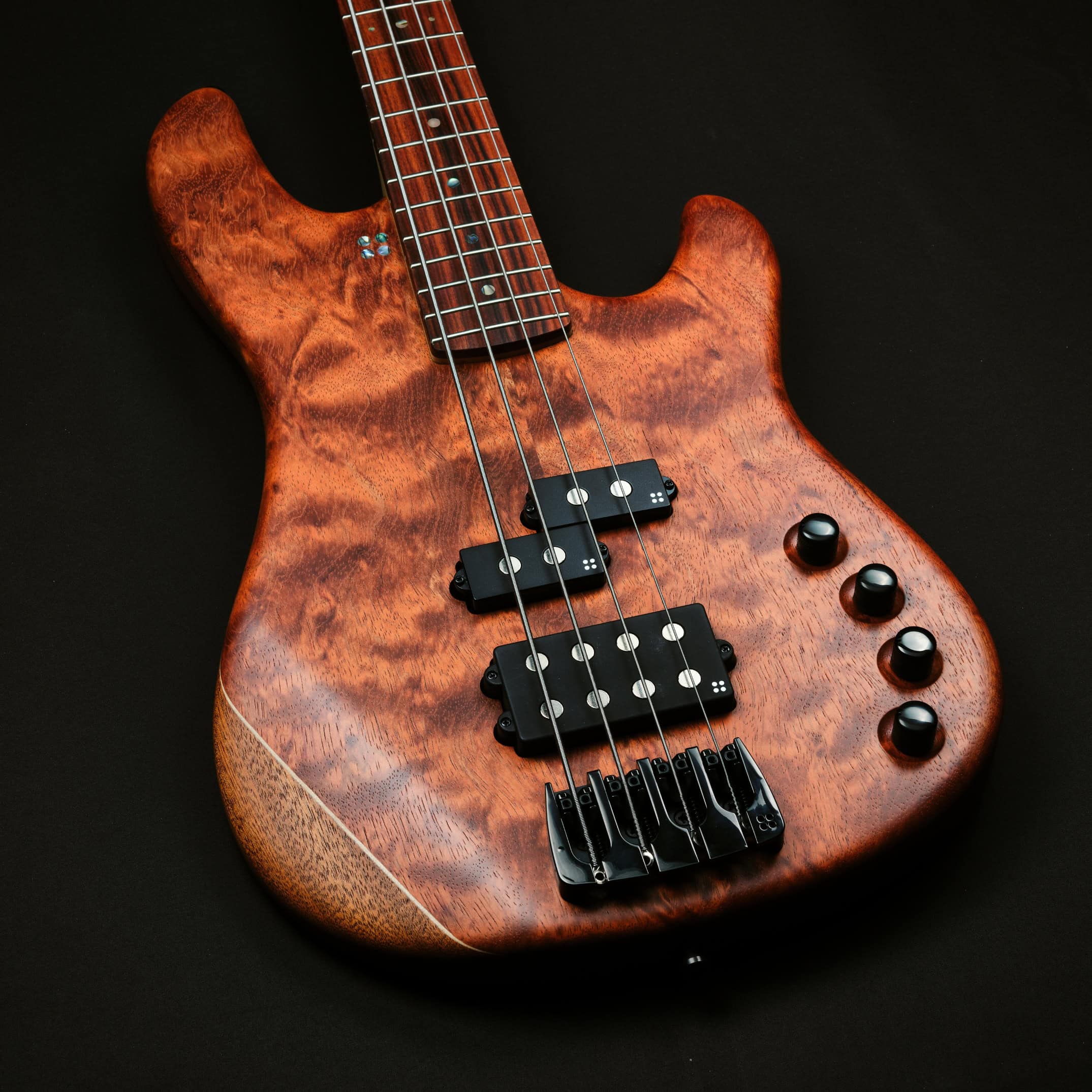
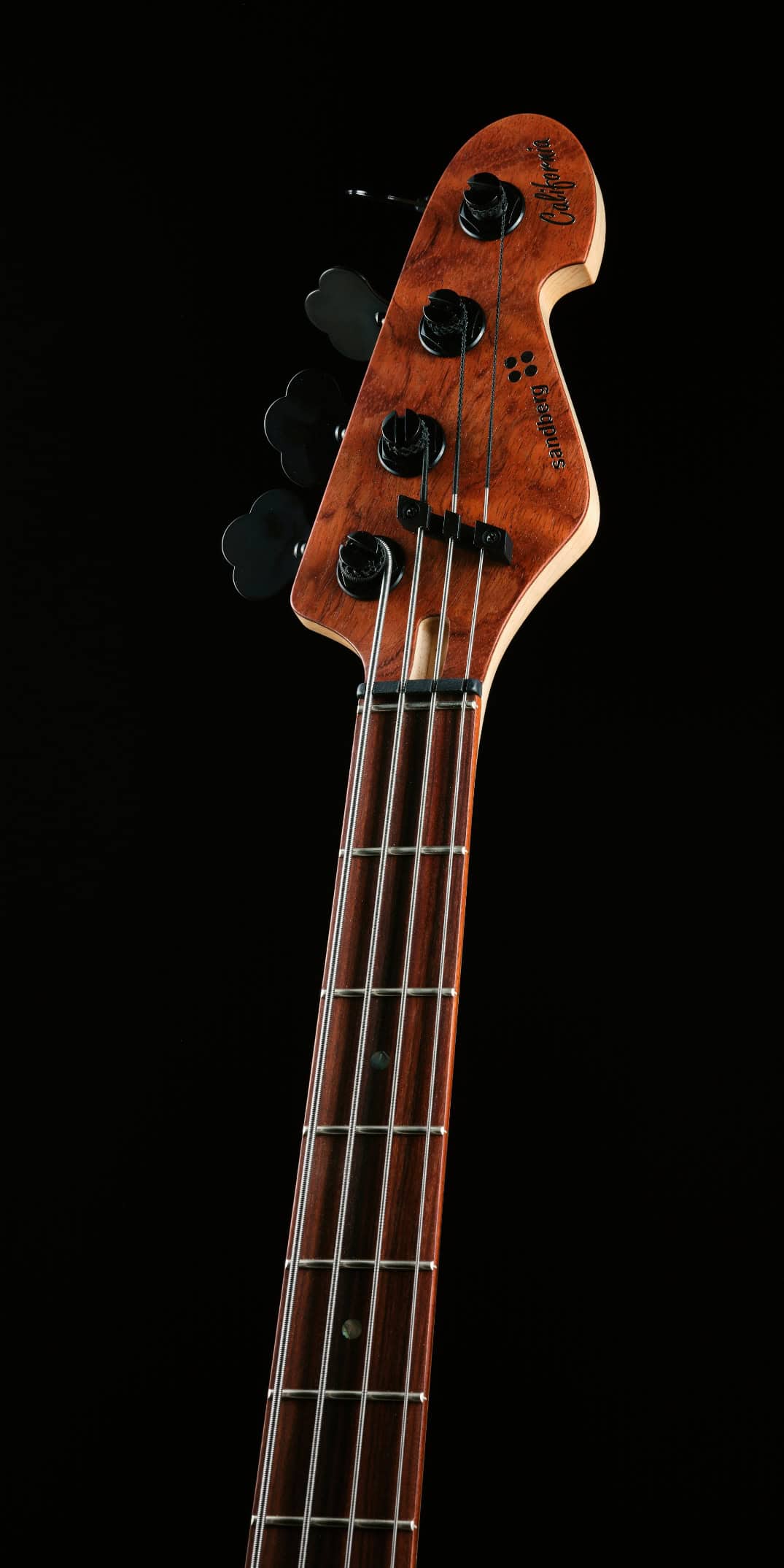
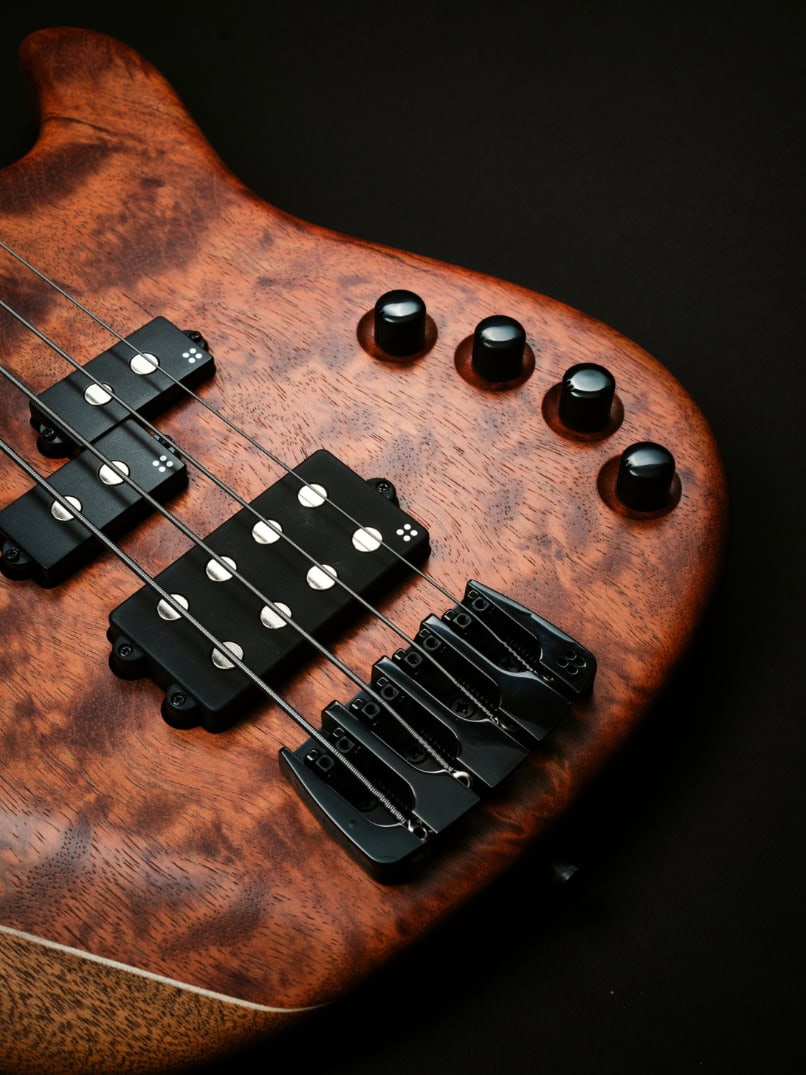
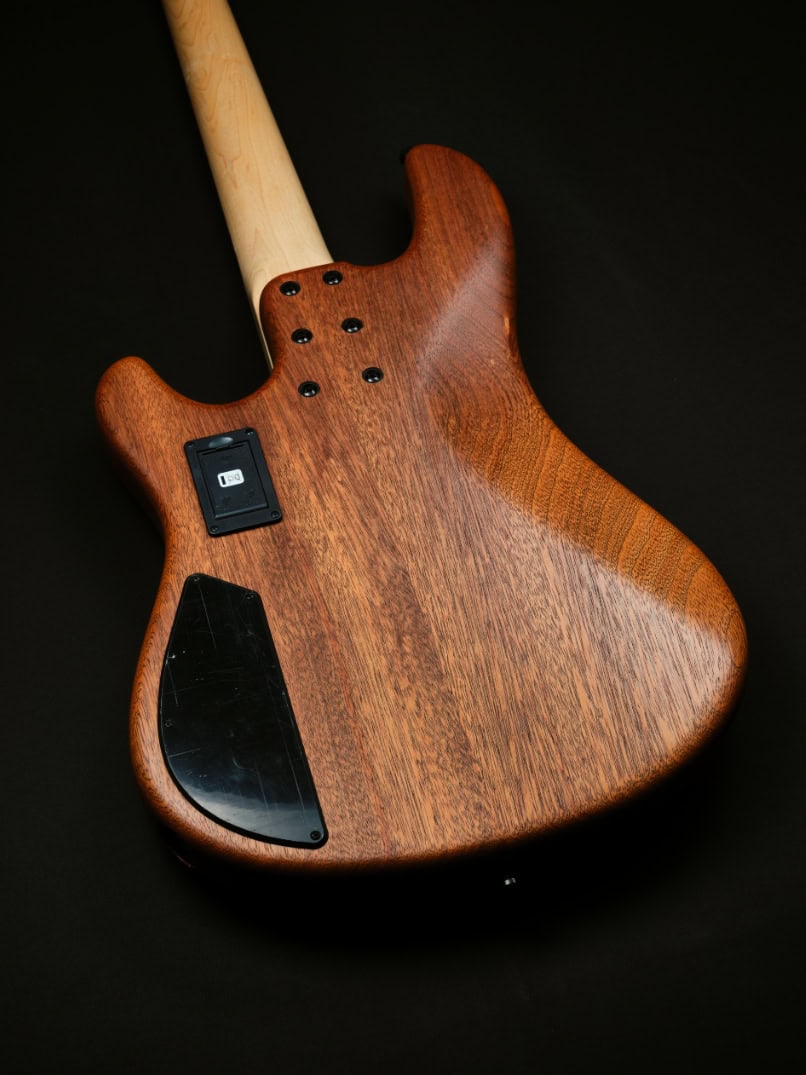
Mahogany is a warmer, softer-voiced body wood than the alder a standard California is built from — thick low mids, a rounded attack and a long sustain, with the whole tone sitting a step lower in the range. On its own it can get woolly. That’s exactly what the bubinga top is there for: bubinga is hard, dense and heavy, and a cap of it over a mahogany core puts the snap and the top-end definition back on the front of the note without taking away the weight underneath. You hear it as a fast, clear attack over a fat body — the ghost notes and the fingernail sit right on top instead of disappearing into the mids. The matte finish keeps the whole thing breathing, and you can see the hairline where the two woods meet running around the edge of the body.
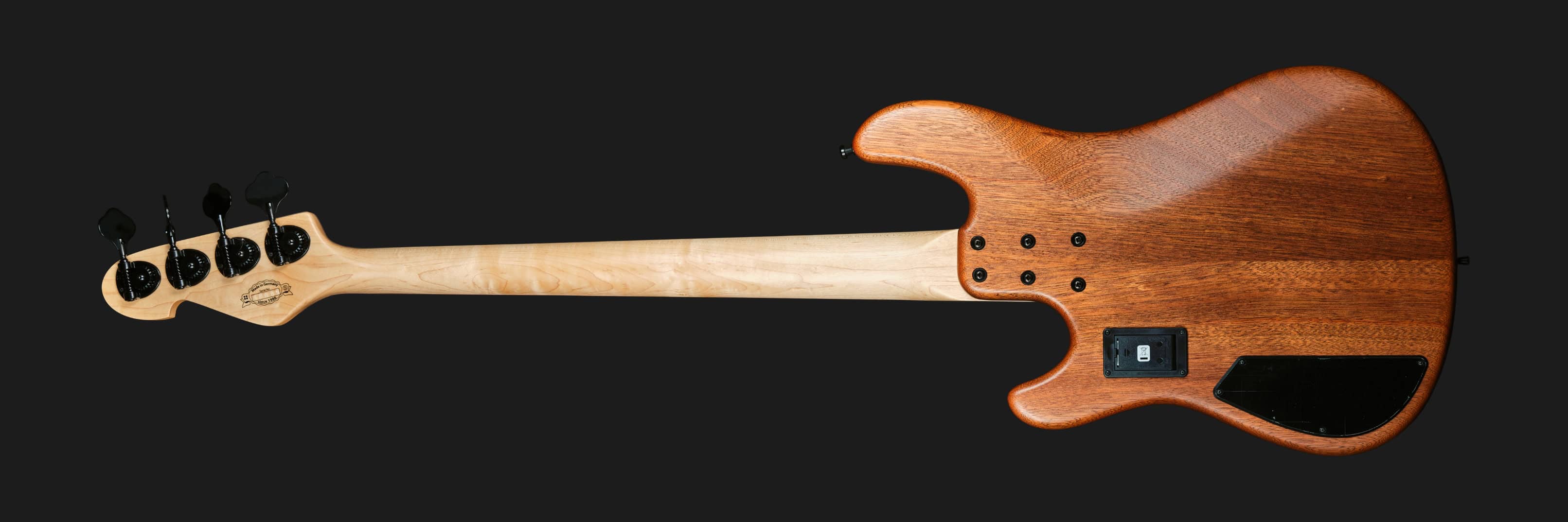
The neck is canadian hard rock maple, bolted on and left natural on the back — bright, stiff, and quick to speak, which is the counterweight the mahogany needs. The fingerboard is pau ferro with abalone dot inlays, and pau ferro sits neatly between the two boards you know: warmer and more forgiving than maple, tighter and more focused in the attack than rosewood, with an oily surface that stays fast under sweaty fingers. Twenty-two frets in 2.7 mm wire, plus a zero fret at the top with a string guide behind it — open strings ring with the same metal-on-metal character as fretted notes, and your first-position action is set by fret height instead of nut slot depth.
Scale is the standard 34″ with a 39.5 mm nut, so this is a familiar four-string neck, not a project. At the bridge the string spacing adjusts from 18.5 mm to 20 mm, which is a real range — set it wide for slap and thumb work, pull it in if you play close and fast with fingers. And at 3.84 kg the mahogany-plus-bubinga build lands right in the middle of the California weight range, balanced on a strap rather than nose-heavy.
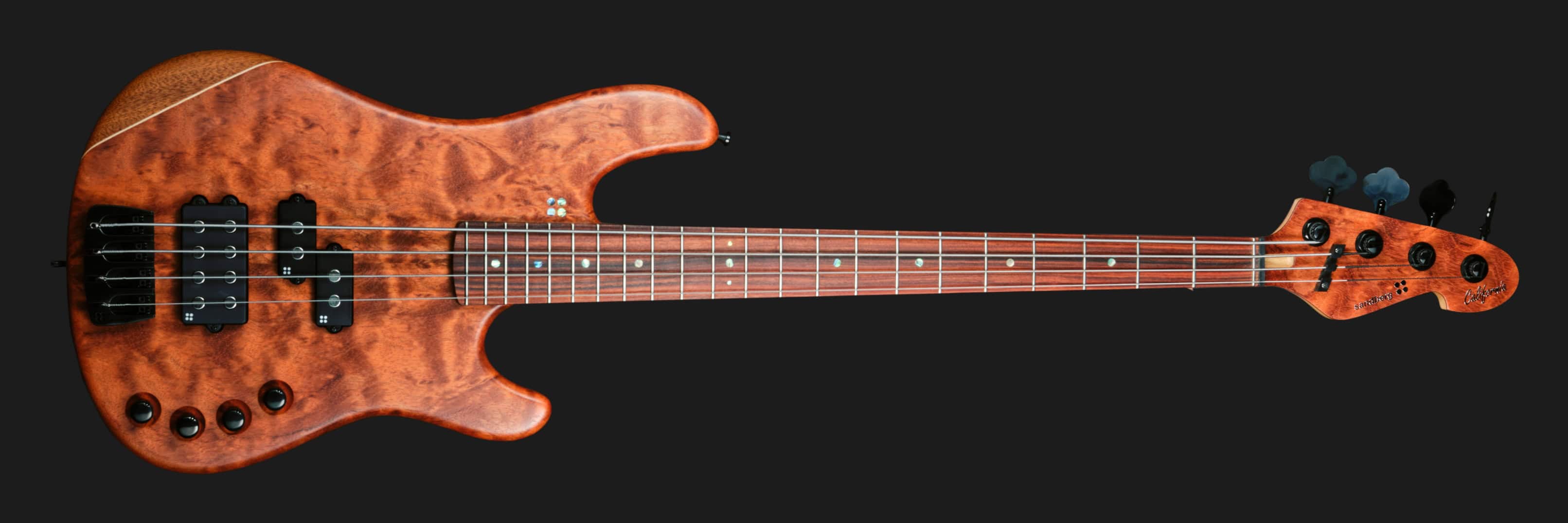
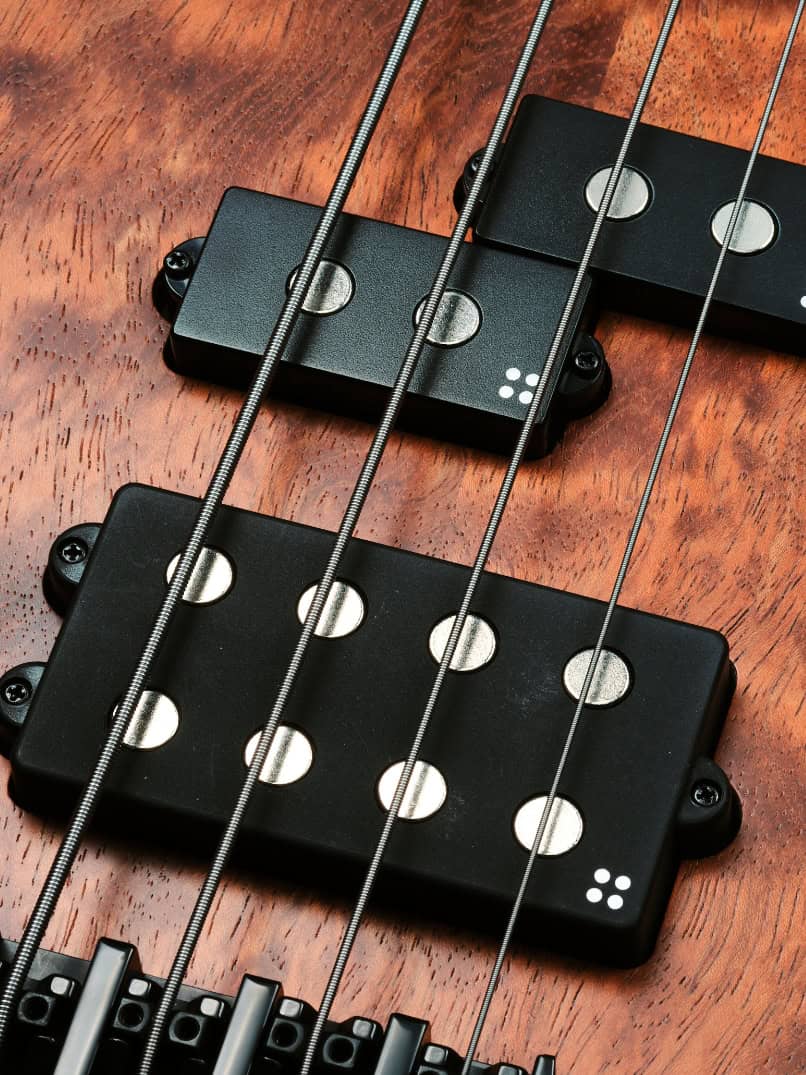
VM means a reverse split-coil at the neck and a Sandberg Power Humbucker at the bridge. Reversing the split-coil moves the coil under the E and A strings closer to the bridge, which tightens and focuses the low end — the difference between a bottom that speaks and one that just spreads. Soloed, it’s the thick mid-forward Precision voice, and on a mahogany body it’s about as fat as that sound gets while staying tidy at the end of each note.
The bridge humbucker is the other half of the argument: dense, loud and aggressive, with the growl that cuts through a distorted guitar before you touch the EQ. Blended, you land where most players actually live — split-coil weight underneath, humbucker bite on top. The Sandberg 2-band preamp boosts and cuts bass and treble, and pulling the volume knob drops the bass into passive, where the treble control becomes a genuine tone control rather than a dead knob. A battery quitting mid-set costs you the boost, not the gig.
This is the VM for the player who wants the platform’s punch without the brightness of an alder-and-maple build — a warm, woody core with the bubinga keeping the attack crisp and the pau ferro board smoothing the edges. It covers old-school weight, modern slap and rock grind without a pedal in the chain, and it does it looking like furniture rather than a stage prop. If you’ve been waiting for a California that doesn’t shout across the room, this is it.
Specs
Body
- Body Wood
- Mahogany with figured bubinga top
- Color
- Natural
- Body Finish
- Matte
- Pickguard
- None
Neck
- Neck Wood
- Canadian hard rock maple, bolt-on
- Fingerboard
- Pau Ferro with abalone dot inlays
- Scale
- 34" (864 mm)
- Frets
- 22 plus zero fret
- Fret Size
- 2.7 mm
- Nut
- 39.5 mm, with string guide behind the zero fret
- Strings
- 4
- Headstock
- Matching bubinga face
- Position Inlays
- Abalone dots
- Tuning
- Standard
Weight
- Weight
- 3.84Kg
Electronics
- Pickups
- Sandberg reverse split-coil (neck) / Sandberg Power Humbucker (bridge)
- Preamp
- Sandberg 2-band, active / passive, passive tone control
- Controls
- Volume (push/pull active-passive), balance, bass, treble
Hardware
- Bridge
- Sandberg, adjustable string spacing 18.5 mm to 20 mm
- Hardware Finish
- Black
- Includes
- Sandberg gig bag